Presentations: SSHM ch4 - #1 Jayden Torres #2 Laura #3 Natalie Moreno
1. Tragedies that befell him in his 40s led to James's quest for ___.
2. What experience led James to "the taste of the intolerable mysteriousness" of existence?
3. What did James think is sacrificed when we study the mind in objective analytic terms?
4. What did Thoreau say at the end of Walden?
5. His experiments with nitrous oxide gave James what warning?
6. What did James say about his house in Chocorua?
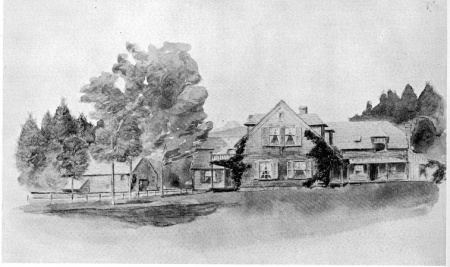
(below)
7. What does James mean by "continuous," when he says consciousness is continuous?
8. What metaphors most naturally describe consciousness?
9. We all split the universe into what two great halves?
3. What did James think is sacrificed when we study the mind in objective analytic terms?
4. What did Thoreau say at the end of Walden?
5. His experiments with nitrous oxide gave James what warning?
6. What did James say about his house in Chocorua?
(below)
7. What does James mean by "continuous," when he says consciousness is continuous?
8. What metaphors most naturally describe consciousness?
9. We all split the universe into what two great halves?
LH
- What artist was described by a critic as having failed to learn from his failures?
- Who were the Levellers and Diggers?
- The chaos of contingency in life is a reminder that what?
- What did the Strawsons (father and son) disagree about?
- What does KS regret about his academic career?
- What are telic and atelic activities? What happens when we focus too much on the former?
- What was Aristotle's insight?
- How does KS's interpretation of Groundhog Day differ from Buddhist interpretations?
- What 'ism plays a critical role in the origins of failure?
- What liberates Phil Connors?
FL
1. What are Unicorns (in the tech-finance sense)?
2. How does Nick Paumgarten define magical thinking?
3. What's been a "paramount fetish on the right for years"?
4. What did Trump understand "better than almost everybody"?
5. How did the Internet enable and empower Trump and Fantasyland?
6. What is "the most disturbing power of contradiction"?
7. What good news does Andersen hope is true?
Discussion Questions
- What does "transcendence" mean to you?
- Do you think you could remain hopeful and happy after losing a child?
- Will we ever fully understand the origins and nature of consciousness?
- Does your internal life feel continuous to you, or "chopped into bits"?
- What does being "woke" mean to you?
- Does the thought that "this too shall pass" console or comfort you? 104
- Have you read Michael Pollan's How to Change Your Mind? COMMENTS? 115
- Was Leonard Cohen right about "the crack in everything"? 116
- Do you agree with Kaag about Wittgenstein? 124

2. What experience led James to "the taste of the intolerable mysteriousness" of existence?
ReplyDeleteThe experience that led James to “the taste of the intolerable mysteriousness” of existence was losing his son Herman. This drove him to further investigate existence to decide whether it could be anything other than intolerable or not. I think many people would agree that the loss of someone you care about is often a perspective-changing experience. It seems to often prompt people to change the way they’re living their lives.
3. What did James think is sacrificed when we study the mind in objective analytic terms?
James thinks that this method misses the subjective sense of consciousness: the “mind from within.” He thought that a human thought couldn’t be described by dissecting and analyzing it; it takes away the lived experience of being human. I think I agree with James here. Science tends to be very logical, but human emotions and consciousness is not always logical, it seems. They probably can’t be analyzed in the same way objective facts can be.
4. What did Thoreau say at the end of Walden?
At the end of Walden, Thoreau said “Only that day dawns to which we are awake. There is more day to dawn. The sun is but a morning star.” I think this quote is cool, and I like how inspirational it is. I agree with the notion that there is constantly more to learn and discover if we open our eyes to it.
Tragedies that befell him in his 40s led to James's quest for "something else"
ReplyDeleteWilliam James says that streams or rivers are the best metaphors to use for consciousness because of the unbroken flow they share.
When James said that consciousness is continuous he means that it's never ending, and it's not split into bits. I agree that consciousness is continuous, my internal life flows from moment to moment it's not chopped up into bits.
Section #1
Section #1
ReplyDeleteCould you remain hopeful and happy after losing a child?
No. I would recover eventually, but initially I would be in great grief. Losing anyone is hard, and it would be no different if I were to lose a child.
Will we ever fully understand the origins and nature of consciousness.
I feel like we could, but I do not believe it is possible any time soon. I believe it would take extended times of heavy research to fully understand how and why we’re conscious, so it is definitely longer than an overnight process.
What does “being woke” mean to you?
I think being woke means that you have come to terms that certain things are not acceptable that once were. For example, people acknowledging that some terms are harmful would mean that they are woke. I do believe wokeness has been used as a weapon against Gen Z. Sometimes Gen Z can be nitpicky, but overall, I believe that being woke is a good thing.
Section #1
Delete1. Do you think you could remain hopeful and happy after losing a child?
A: While it would be improbable to expect one to recover from such a loss with haste, I believe that it's imperative to retain a sense of hope and happiness.
I'd adhere to the principles of Stoicism. Worry not about what is absolute, but about what you can do to mend the situation. While the grief of losing a child is crippling, it wouldn't serve one well to writhe in perpetual sorrow.
2. Does your internal life feel continuous to you, or "chopped into bits"?
A: When examining my "internal life" in retrospect, it seems to be "chopped into bits." As a chronicle would be organized, I feel as if my life is divided into a series of chapters or volumes. Some are more enjoyable than others, but I never quite feel like my life moves in a linear fashion. While it's clearly continuous, I never process it as such, and tend to stratify certain eras of my existence.
3. Does the thought that "this too shall pass" console or comfort you?
A: The perception of pain as a temporary hindrance is certainly a comforting perspective. While I am unaware of what awaits me in the future, I am assured that any present inflictions will pass.
My apologies, I meant to publish this as an independent comment.
DeleteSection #1
ReplyDelete1. Tragedies that befell him in his 40s led to James's quest for ___.
The tragedy of his father's death in 1884 led James on a quest for transcendence. He tried to determine whether he could stretch, or transcend, the finiteness of man through his consciousness. This endeavor was partly encouraged by his father's writings on mysticism and theology, which James edited that same year.
2. What experience led James to "the taste of the intolerable mysteriousness" of existence?
Soon after Henry James' death, James lost his young son Herman to illness. James struggled to see how life could possibly continue in any meaningful way now that his beloved child had passed. This loss caused him to taste existence's "intolerable mysteriousness" and to wonder if it could ever be tolerable at all; he sought to discover this through studying consciousness.
3. What did James think is sacrificed when we study the mind in objective analytic terms?
James believed "the continuous flow of the mental stream" is sacrificed when the mind is studied objectively. The human mind, so closely tied to the human experience, is so deeply personal that it cannot be studied from a solely objective approach; it must be subjective. Our minds, our thoughts, are the only things that are truly ours, and can never be taken away, because they come entirely from within.
1. In his 40's, James's father and son unfortunately passed.
ReplyDelete4. At the end of Walden, Thoreau said "only that day dawns to which we are awake. There is no more day to dawn. The sun is but a morning star".
5. Nitrous oxide gave James the warning against overflowing philosophizing.
Tragedies that befell him in his 40s led to James's quest for what?
ReplyDeleteThe losses James experienced in his 40s pushed him toward a search for the transcendent. He lost his father in 1884 and then his young son Herman later to pneumonia. The reading describes these events as giving James a "taste of the intolerable mysteriousness" of existence. Losing a child seems like the kind of thing that would either destroy a person's worldview or force them to completely rebuild it. For James it did the latter, it motivated him to explore whether consciousness could allow a person to stretch beyond physical limits.
What did James think is sacrificed when we study the mind in objective analytic terms?
James believed that breaking the mind down into measurable, quantifiable pieces destroys what makes it worth studying in the first place. He called this approach the "brickbat plan of construction" and argued that the "continuous flow of the mental stream is sacrificed" when we treat consciousness like any other object. I think he is right about this. The scientific method is the best tool we have for understanding the physical world, but the subjective experience of being alive does not fit neatly onto a quantitative scale.
His experiments with nitrous oxide gave James what warning?
James took his nitrous oxide experiments as a warning against philosophizing excessively. Whatever he experienced convinced him that reality is too big and too unique for any formal system of thought to fully understand. No human account can describe the full picture.
Section #1
ReplyDelete1.) Tragedies in his 40s led James to a search for meaning and a more stable way of understanding human experience.
2.) An intense personal crisis involving illness and depression led him to that sense of “the intolerable mysteriousness” of existence.
3.) James thought that when we study the mind only in objective, analytic terms, we lose the lived, immediate quality of experience itself, the feeling of consciousness as it is actually experienced.