The online syllabus is subject to revision, always check under "NEXT" in the top right on our main page for updates. It's best not to rely on a version printed early in the semester, changes are inevitable.
Introduction to Philosophy aka CoPhilosophy ("CoPhi") in Oliver's classes/ PHILOSOPHY 1030- Sections H1, H2, H3 (TTh 9:40, 1PM, 2:40 PM respectively
Phil.Oliver@mtsu.edu. 220 HONR (Honors Building), 300 JUB James Union Building
Office hours Fall 2026: T/Th 11-1 on campus, other days on Zoom & by appointment... (615) 898-5263, (615) 525-7865 only during office hours please: call before coming in.
We'll use this site, NOT Canvas, D2L (etc.) for online discussion and support.
Eventually we'll all become "authors" on this site, to post reports etc. Meanwhile, post your thoughts, research discoveries, and questions in the "comments" spaces (which appear below each post).
CoPhilosophy is an open-ended and ongoing conversation/collaboration among ourselves and with philosophers of the past, and anticipating those of the future. Participate in the conversation.
Please read the assigned and recommended texts. There are many among us who would like to deny you that freedom. And as Mr. Clemens said,
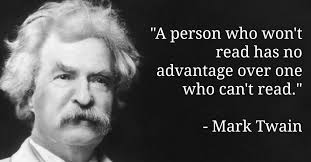
So, don't inflict illiteracy on yourself.
TEXTS
REQUIRED for Fall 2025:
A Little History of Philosophy (LHP) by Nigel Warburton - see link to etext in sidebar
Why Grow Up? Subversive Thoughts for an Infantile Age (WGU) by Susan Neiman
Sick Souls, Healthy Minds: How William James Can Save Your Life (SS) by John Kaag
THE SOCRATES EXPRESS: In Search of Life Lessons from Dead Philosophers by Eric Weiner

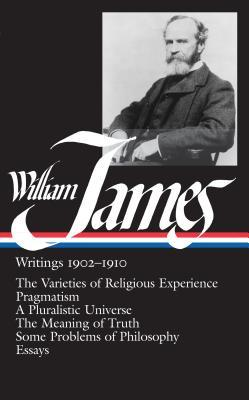
- William James : Writings 1878-1899 : Psychology, Briefer Course / The Will to Believe / Talks to Teachers and Students / Essays (Library of America)
- William James : Writings 1902-1910 : The Varieties of Religious Experience / Pragmatism / A Pluralistic Universe / The Meaning of Truth / Some Problems of Philosophy / Essays (Library
And:
William James, Pragmatism lecture 1; Gymnasiums of the Mind (on the Peripatetic philosophy)
Pale Blue Dot & WATCH: Pale Blue Dot (Sagan).
LISTEN: What is Philosophy? and Who's Your Favourite Philosopher? (PB Philosophy Bites).
This I Believe website, for examples of others' personal philosophies succinctly summarized.
Some miscellaneous links and other recommended texts here... Grandfather Philosophy's YouTube channel (he's one of our more mature recent MTSU alumni)...
Feel free to use etexts and audiobooks, when available.
* "Reserves books are checked out at the Circulation/Reserves Desks. To borrow a reserves book, students must have either their student ID or another picture ID. No more than 4 reserves books can be borrowed out at a time. Reserves books can be returned at the Circulation/Reserves Desks or the book drop on the side of the building. However, I always recommend students return reserves books to the Circulation/Reserves Desks. We are only able to check the book drop periodically and a book may be in the book drop for some time before it is checked in and removed from the student account. Books brought to either desk are checked in when returned.
Typically 3-day loans cannot be renewed and must be returned on the due date. Reserves books that are 14 days overdue will be considered lost. Students will be billed a $75 flat fee ($50 replacement + $25 processing) for the lost item. These fees will be transferred to the Bursar’s Office and reflected on students’ accounts. Students’ fees for replacement books must be paid through the Bursar’s office. Once fees have been transferred to the Bursar’s Office, they can no longer be refunded by the library, even if the books are returned to the library." --Suzy Burkhardt, Walker Library
"Pluralism" means, among other things, respecting and engaging with many voices, many points of view... not because you agree with them all, necessarily, but because they all may nonetheless have something to teach you. So, we'll be considering multiple texts simultaneously. Think of it as a multi-lane highway of ideas. They may not always integrate smoothly, lane-changes may sometimes be a challenge... but if we drive attentively we'll get where we're going. Always read all the assigned material before class.
IMPORTANT DATES Fall 2026
- August 24 – Classes Begin
- September 7 – Labor Day Holiday – No Classes/University Closed
- October 10-13 – Fall Break – No Classes
- November 25-28 – Thanksgiving Holidays – No Classes (University Closed November 26-28)
- December 2 – Last Day of Classes
- December 3 – Study Day, No Classes/Exams/Mandatory Meetings
- December 4-10 – Final Exams as Determined by University Approved Exam Schedule
- December 10 – Last Day of Term
- December 12 – Commencement (Days and Times TBD)
- December 13 – Deadline for Submission of Final Grades, 11:59 p.m.
tba - Meet at the Library w/librarian Rachel Kirk, Room 272 (Sections 1 & 3), 264A (Section 2).
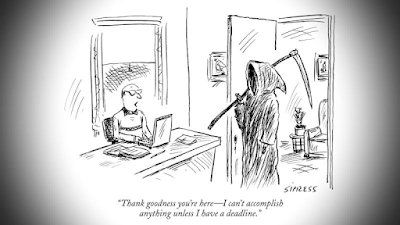
* Deadlines. Due dates are firm. Extensions are possible in the event of illness or some other unavoidable or extraordinary circumstance, but must first be authorized by me. jpo
AUG
25 Introductions. Post your response to these questions, interpreted any way you like: Who are you? Why are you here? And, What do you think Philosophy is? Do you have a favorite philosopher? Do you have an easily-summarized personal philosophy? (Maybe something short like Charlie Brown's sister Sally's?--"No!")
27 Socrates and Plato-LHP 1. Weiner Intro, 1-2. Recommended: FL 1-2. HWT Intro & prologue.
SEP
1 Aristotle-LHP 2. Rec: FL 3-4. HWT Sections 1-3.
3 NO CLASS [Make it up by attending the Lyceum Oct 2]. Read and post comments on Skepticism-LHP 3. Rec: FL 5-6. HWT 4-5.
8 Epicureans and Stoics-LHP 4-5. Weiner 6, 12. Rec: FL 7-8. HWT 6-8. Select midterm report presentation topic & date: indicate your 1st and 2d choices for date and topic in the comments space below "midterm report presentations"
10 Augustine, Boethius, Anselm, Aquinas-LHP 6-8. Rec: FL 9-10. HWT 9-10.
15 Kaag 1 - SSHM... Midterm report presentations begin. Machiavelli, Hobbes-LHP 9-10. Rec: FL 11-12. HWT 11-13.
17 Kaag 2... Montaigne, Descartes, & Pascal-LHP 11-12. Weiner 14. Rec: FL 13-14. HWT 14-15.
22 Kaag 3... Spinoza, Locke, & Reid-LHP 13-14. Rec: FL 15-16. HWT 16-17.
24 Kaag 4... Berkeley, Leibniz, Hume, & Rousseau-LHP 15-18. Weiner 3. Rec: FL 17-18. HWT 18-19.
29 Kaag 5... Kant, Bentham, Hegel, Schopenhauer-LHP 19-23. Weiner 5. Rec: FL 19-20. HWT 20-22.
OCT
1 Kaag 6... Mill, Darwin, Kierkegaard, Marx-LHP 24-27. Rec: FL 21-22. HWT 23-24.
[2 Lyceum: John Kaag...]
6 Exam 1.
8 Peirce & James, Nietzsche, Freud-LHP 28-30. Weiner 11. Rec: FL 23-24. HWT 25-26.
Russell, Ayer, Sartre, de Beauvoir, Camus-LHP 31-33. Weiner 13. Rec: FL 25-26. HWT 27-28.
Fall Break
15 Wittgenstein, Arendt, Popper & Kuhn, Foot & Thomson-LHP 34-37, Rec: FL 27-28.
20 Rawls, Turing & Searle, Singer-LHP 38-40. WGU Introduction-p.35. Rec: FL 29-32. Select/assign final report presentations
22 WGU -p.79 Rec: FL 33-34.
27 WGU -p.165. SSHM Prologue. Rec: FL 35-40. WJ, Is Life Worth Living? Final report presentations begin.
29 WGU -p.192. SSHM ch1. Rec: The Dilemma of Determinism. FL 41-42, Setiya Intro-1.
NOV
3 WGU -p. 234 SSHM ch2. Rec: The Moral Equivalent of War. FL 43-44. Setiya 2.
[NOTE: We re-arranged the syllabus to read SSHM prior to the author's Lyceum appearance in October/]
5 SSHM ch3. Rec: FL 45-46. Setiya 3
10 SSHM ch4. Rec: Setiya 4
12 SSHM ch5. Rec: Setiya 5.
17 SSHM ch6-7 Rec: Setiya...
19 Final report presentations conclude
24 to be announced... [exam review?]
DEC
1 Exam
5 Final report blog post (final draft) due. Post earlier for potentially-helpful feedback
See note above on * Deadlines.
==
Screens down.*We're going to be screen-free in class this semester... except for the big one that projects our "CoPhilosophy" site; and during the last 10 minutes of class when you can post comments on the day's reading and discussion; and when class is outside, and we need to see our discussion questions. Studies show that our focus, attention, and retention should grow... and taking notes long-hand will grow new neural connections. Let's see how it goes...
EXAMS. Two objective-format exams based on daily questions, each worth up to 25 points. Bonus questions covering Recommended texts.
REPORTS. Midterm presentation, final presentation & related blog post (1,000+ words minimum). Worth up to 25 points each. Sign up online for midterm and final report presentation date & topic... Topic may be related to a scheduled syllabus topic (for example: Descartes, Spinoza, Hume, etc.) or to one of the recommended texts.
PARTICIPATION. Participation includes attendance, your full and attentive presence in class, and posts, comments (etc.) to our Bioethics site prior to each class. No points formally allotted, but steady participation earns strong consideration for a higher final grade. Hypothetically, for instance: say you earned a total of 88 points (of a possible 100) on the exams and reports. If you did not participate consistently and well, your course grade would be B+. If you did, it would be A. In other words, strong participation earns you EXTRA CREDIT. (So please don'[t ask, at the end of the semester, how to get it. This is how: participate.)
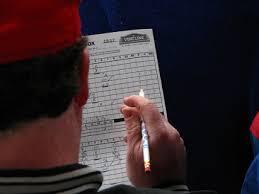
SCORECARDS. Because your professor is a baseball fan, we'll track participation with baseball scorecards adapted to the purpose. Come to class to get on 1st base. Post pertinent comments and questions for discussion prior to class to advance to 2d & 3d base.To come home and "score" a participation run, post a pertinent research discovery-something we wouldn't have known just from the day's assigned reading. Good places for quick online research include the Stanford Encyclopedia of Philosophy, the Philosophical Dictionary, and the Internet Encyclopedia of Philosophy.
(For instance, when we discuss Socrates and Plato you might post a comment indicating your view of his so-called enlightened ignorance -- "I know that I know nothing" etc. -- or of Plato's confident assertion of the possibility of rationally understanding the ultimate structure of reality, "Forms" etc. You might also pose the discussion question "Do you think Socrates should have taken the opportunity to escape Athens before his death sentence was imposed?" And you might share your discovery that Socrates seemed to have a higher opinion of women than most of his companions had, speaking of “men and women,” “priests and priestesses,” and naming foreign women as his teachers: Socrates claimed to have learned rhetoric from Aspasia of Miletus, the de facto spouse of Pericles (Plato, Menexenus); and to have learned erotics from the priestess Diotima of Mantinea (Plato, Symposium). --Stanford Encyclopedia of Philosophy, "Socrates"
==
"Solvitur ambulando"... the art of walking
A NOTE ON THE BLOG POST FORMAT: final report blog posts should include appropriately-bloggish content: not just words, but also images, links, videos where relevant, etc.
A NOTE ON WORD COUNTS. 1,000 words is a minimum. Write more, if you've got more to say. Write a tome, if you've got one in you. But your main goal in writing for our course is always to be clear, to say what you mean, and to say things your classmates (and I) will want to respond to.
==
Watch this space for updated info on the university's and our department's FREE tutoring service... and learn how to study, get help with understanding difficult course material, receive better test grades, or simply improve your grade point average. Tutoring is available in study skills and learning strategies that includes sessions on time management, notetaking, when and where to study, and memory principles. Tutoring is also available in over 200 courses including biology, history, computer information systems, physics, math, psychology, chemistry, economics, recording industry, and many more. The central location for tutoring is the Tutoring Spot, located in Walker Library, but is also conducted at various other campus sites. For available tutoring opportunities, visit http://mtsu.edu/studentsuccess/tutoring.php#on . For questions, call the Tutoring Spot at 615-904-8014.
Dr. Cornelia Wills
Director of Student Success
Middle Tennessee State University
P. O. Box 500
Murfreesboro, TN 37132
Telephone: 615-898-5025
http://mtsu.edu/studentsuccess/index.php
==
Students who believe they have been harassed, discriminated against or been the victim of sexual assault, dating violence, domestic violence or stalking should contact a Title IX/Deputy Coordinator at 615-898-2185 or 615-898- 2750 for assistance or review MTSU’s Title IX website for resources. http://www.mtsu.edu/titleix/
==
Writing Center
The Margaret H. Ordoubadian University Writing Center serves all MTSU students, from freshmen to PhD candidates, on writing from any discipline, and in any genre. [website...] We have a brand new digital class visit, a brief introduction to the UWC...
Tutoring sessions begin August 24th, and this semester, students will have two choices for online writing support:
Live Chat: students to use their mic and camera and meet tutors in real time to work on a shared document;
Document Drop: students upload their text and assignment sheet, identify specific feedback needs, and receive tutor feedback through email.
We also support writers through course-specific or assignment-specific workshops. The UWC administrative team has worked closely with faculty in diverse programs and departments, such as Biology, Anthropology, and Professional Studies, to create workshops and writing support for students in those courses. Please email Erica Cirillo-McCarthy, Director of the UWC, at erica.cirillo-mccarthy@mtsu.edu if you are interested in talking about ways the UWC can support writers in your class.
==
Resources for awards, scholarships, grants, Study Abroad etc. from the University Fellowship Office --
Services We Offer
We try to match students with national and international opportunities. As time permits, we can also read essays and give feedback on how to be competitive. Student can simply email Laura.Clippard@mtsu.edu for info.
The Undergraduate Fellowships Office has had students receive numerous scholarships, including Fulbright, Goldwater, Gilman, Critical Language Scholarship, and Udall, as well as finalists for the Marshall Scholarship, Rhodes Scholarship, and Truman Scholarship.
Most Popular Fellowships and Links:
Our main website: https://www.mtsu.edu/honors/ufo/index.php
Study Abroad Funding: https://www.mtsu.edu/honors/ufo/nationalfellowships.php
For example, there is special funding for students who have a Pell grant with the Gilman Scholarship to study abroad.
Gilman Website: https://www.gilmanscholarship.org
Living Overseas after Graduation: https://www.mtsu.edu/honors/ufo/teaching-options-updated-feb-2023.pdf
Fulbright: https://us.fulbrightonline.org
STEM options: https://www.mtsu.edu/honors/ufo/additionalresources.php
Full List of options: https://www.mtsu.edu/honors/Scholarship_Descriptions.php
List of winners: https://www.mtsu.edu/honors/cumulative-awards.php
==
Additional information of possible interest...
==
A note from Project Democracy's Professor Sayward on registering to vote and being engaged...
==

Category: Creativity & Cultural Expression
Disciplinary Knowledge in Fine Arts/Humanities
Outcome C1: Students will demonstrate intercultural understanding by building knowledge, self-awareness, and conceptions of global and intercultural perspectives, values, systems, and attitudes.
*Screens down, no open phones/laptops. It's come to this, though I've long resisted it: when each class commences, personal screens must close (unless you have a formal exemption certified by Disability & Access Center).
So: eyes on me and the class screen (when appropriate), or on whichever classmate has the floor at the moment. Being present also means being attentive, listening, and-if you're a notetaker-doing it old-school, with pencil and paper.
There's an upside to longhand notetaking, additional to removing screen-distraction: neuroscientists report that writing with a handheld implement actually wires and strengthens areas of the brain that would otherwise fester. So we'll go with that.
This policy isn't meant to be punitive, though it is reactive to an unfortunate trend I've noted in recent semesters: a tendency of more and more students choosing to check out mentally during class, retreating into the isolation of their phones and laptops.
Bottom line: our "CoPhilosophy" class time is meant to be collaborative and mutually engaged. You can't collaborate and engage if you're not paying attention to what's happening here and now.
Let me know if this policy creates a problem for you. We'll discuss a solution.
A.I. Policy. I encourage the creative, collaborative, and critical use of A.I., so long as you are entirely transparent about it. Do not present A.I.-generated content as your own original work. Do share transcripts of your A.I. conversations, whenever such conversations inform your thinking and writing. Use it as a collaborative tool, if you like, but do think and write for yourself.
BOOKS ON RESERVE...

Section #2 TuTh 1pm-2:25pm
ReplyDeleteSarah Anderson
Hi Professor, how do we become authors on the website? I want to go ahead and set that up to hav it in place for our final project.
Thank you
Sign in with your email after (or before) class.
DeleteI’d like to choose Hobbes as my philosopher/topic of choice, presenting on the 15th.
ReplyDeleteI’d like to do Reid as my topic
ReplyDelete