
Both of these viewpoints were imperfect to James, though finding a middle ground between them would be messy. This, however, was not a problem to James because life itself is messy, making his new philosophy closely reflective of it. James makes several critical distinctions about truth in his philosophy: truth is our story about the facts, truth happens to ideas, and the truths we live by hopefully correspond to reality, but are merely an account, not a reproduction. James aligns the pragmatic method closely with what we know today as the scientific method, using a process of hypothesis, testing, and evaluation to determine what ideas become true.

James also goes into more specific detail about the “testing” process in finding truth. He believed that our ideas should stem from our experiences and sensations in the world. John Kaag gives a lengthy example in the chapter about he and his wife preparing to have a child. In the months of pregnancy, they read countless parenting books about what kinds of parenting techniques were most optimal and all the nuances involved in raising a child. One specific choice they made based on their reading was to exclusively breastfeed, however after the baby was delivered it was unable to breastfeed and after being left alone with John, he told the nurse to “give me a damn bottle.” Ultimately, this example goes to show that we can form stereotypes of what we should do in certain situations, but our actual experiences overshadow them. James encourages people to find what he calls “sensational termini”, or endpoints for our experiments where ideas can be deemed successful or not.
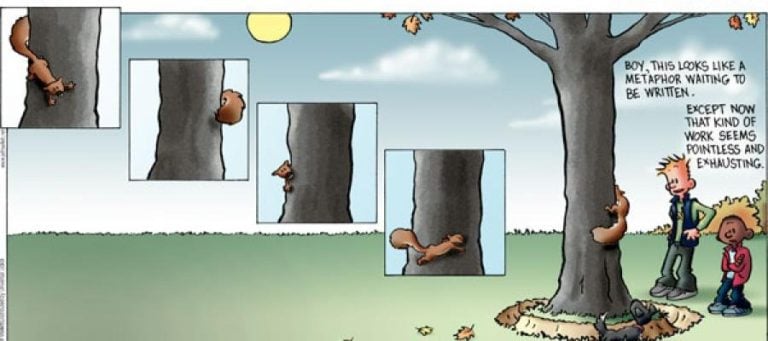
Using this method of evaluating the truth through real-life experiences not only keeps our beliefs rooted in practicality but also helps when it comes to disagreement. One of James’s famous beliefs was that many arguments have no practical issue. An example of this is used to introduce him in Chapter 28 of Nigel Warburton’s Little History of Philosophy, known as “the squirrel problem.” In this problem, a hunter moves about a tree trunk, on the other side of which a squirrel is clinging to the trunk and matching the hunter’s every move. The question of “Does the hunter actually circle his prey?” is one that can be argued from many different angles but doesn’t have any practical impact. Keeping our truths rooted in our real-world experiences, according to Kaag and James, helps us to avoid such arguments and also find common ground with those whom we disagree. As Kaag puts it, experience is “the place where individuals with different ideas can meet and, many times, reach agreement.”
Earlier, it was mentioned that James believed that we must be prepared to call our truths falsehood because we are in a constant process of evaluating our ideas. This process is to our benefit, because our truths are intended to “guide us more or less successfully in our daily affairs,” according to Kaag. In other words, the process of finding new truths improves our lives. This process is accomplished through one’s free will according to James. Kaag writes: “It is up to us. Embracing free will is the first step in affirming optimism about our ability to adapt and grow in the face of life’s challenges.” James not only encouraged the use of free will but went further to suggest that breaking from societal norms and exploring ideas at the fringes of our minds could be a revelation, vastly improving our lives.

Chapter 5 of Kaag’s book gives great insight into James’s views on truth and free will. To summarize, truth is our ideas about the facts of our world and is determined over time and by many tests. Since we live by what is assessed during and prior to our lifetimes, we must be prepared for the truth to change. It should also be rooted in our experiences because it allows us to test what works and what doesn’t and it gives individuals common ground with each other. Additionally, free will gives us the opportunity to make improvements to our lives and change what is seen as true. With this in mind, James also notes that we are ultimately accountable to ourselves and we must determine what possible consequences we are willing to endure. These lessons are amongst the most powerful we can implement in our lives to live out the best versions of ourselves and adapt to our changing world.

"tough-minded scientists" - You don't have to be a scientist to be tough-minded, but you do have to value facts... so toughs do tend to be scientifically inclined.
ReplyDeleteCircling the squirrel would be exhausting, from the dog's point of view, but it wouldn't occur to him to wonder if he was actually doing it. Another lesson we could learn from our canine companions.
"truth is our ideas about the facts" - so many critics of pragmatism miss this basic equation. Pragmatists don't deny the reality of facts, just our present grasp of them. This is why "alternative facts" is oxymoronic... and, for that matter, simply moronic. But "alternative truths" does make pragmatic sense, once we understand that being honest about our present perception of the facts does not guarantee that we've got the story right.