 Sick Souls, Healthy Minds chapter two starts by discussing despair, and specifically the term “anhedonia,” which means the inability to feel pleasure. This is what William James himself used to describe his bouts of depression, later describing the futility and despair of life, writing, “[T]here is no tooth in any one of those museum-skulls that did not daily through long years of the foretime hold fast to the body struggling in despair of some fated victim.” That may be hard to follow, but simply, James was describing how no matter what we do, we will all die. The fossil in a museum was living, once, and that is what we all will be someday, no matter what we do to try and stop it. This is a mindset doomed to failure—if we all die someday, then why live at all? Will anything we do even matter? These are thoughts William James most likely struggled with as well, as the previous chapter detailed his history of depression and even his persistent thoughts of suicide. This chapter is almost a response to the previous. How do you get out of that mindset? Can you? James thinks so, as he was one of those that managed to live despite these thoughts—he calls this being “twice born,” or, being “reborn in order to love, or at least bear, the act of living.”
In order to illustrate this concept, allow me to be way too personal and stupidly sentimental. My moment of rebirth happened in 2020, which, for a lot of people, sucked very badly. I went through the worst depression of my life then. I was never suicidal, but I wasn’t very motivated to live either. It was hard to want to, when everything seemed so bad. There was COVID, obviously. I couldn’t see anyone, and people were dying everyday. Later, in August, it was probably around 3 am, and I was listening to songs from a new artist I had recently gotten into. There was a lyric from one of them, “The moon is crumbling, but that’s okay,” and for some reason, it really got me. It’s such a stupidly simple lyric, but it reminded me of something I had forgotten. I can still be happy, even if the world was going downhill. I’m allowed to be happy, even. I cannot change the world—but I can change my response to it. I think this was the shift to me being more optimistic. Now, I simply don’t see the point in being pessimistic. I’m here, we’re all here anyways. Shouldn’t we try our best to make the most of our lives?
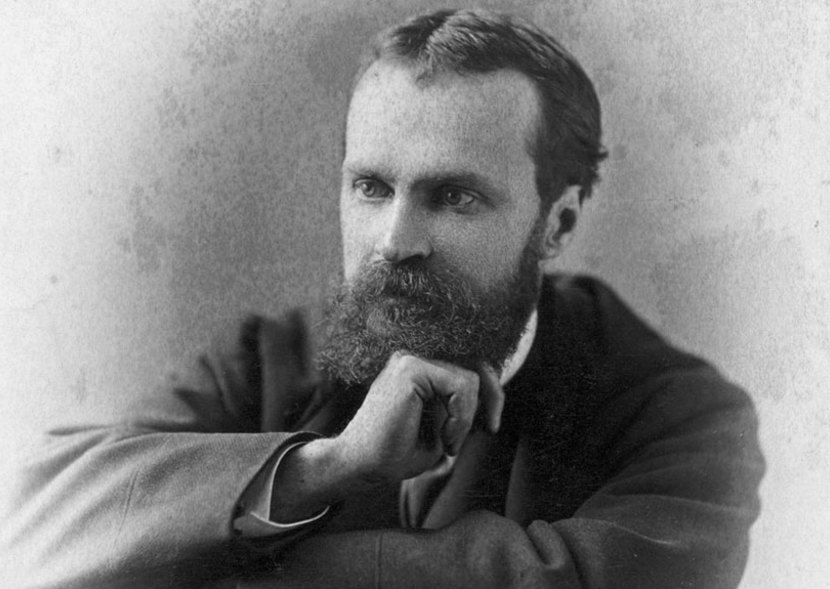 |
| William James, 1880 |
Perhaps I connect so much with William James’ philosophy because I feel his moment of rebirth mirrors mine. He was reborn in the spring of 1870, after reading French thinker Charles Renouvier’s Essais; specifically, a section on his thoughts on free will: he thought that an individual’s will “could break the logical continuity of a mechanical series and be the initial cause of another series of phenomena,” or, the definition of a free act. This inspired James to try that for himself—you can believe in free will all you want, but what it takes to truly understand free will, not just believe it, is see it reflected in your life. In his own words, “My first act of free will shall be to believe in free will.” What seems to be a simple conclusion and act, for the sick soul (such as James and myself), can be all it takes to finally be reborn and start truly enjoying life to its fullest.
After this revelation, James started thinking more about the nature of belief and the intersection of human logic and emotion—after all, he needed a justification for his sudden belief in free will, and most people don’t take “because I chose to believe in it” as a valid argument. So, he came up with this: he couldn’t technically prove free will, at least not in a logical way. However, his belief in free will made him feel better, therefore giving it practical worth. This worth was inseparable from the logical value of his belief. This justification ties into his attitude on human belief and reasoning overall; in his words, “Pretend what we may, the whole man within us is at work when we form our philosophical opinions. Intellect, will, taste, and passion cooperate just as they do in practical affairs.” While this might seem like a basic revelation, it was radical for its time: human beings are incapable of being wholly logical creatures. No matter how hard we might try to be clinical, or logical, or impersonal, emotions will always run some part of our beliefs and our decision making. For example, when you choose to believe in something, or “change your mind” you aren’t just changing your mind, but your whole self. You are making a choice on how to live your life. This doesn’t just apply to belief, but also to the process of falling in love—something James found out through personal experience.
|
William James' wife, Alice Gibbons |
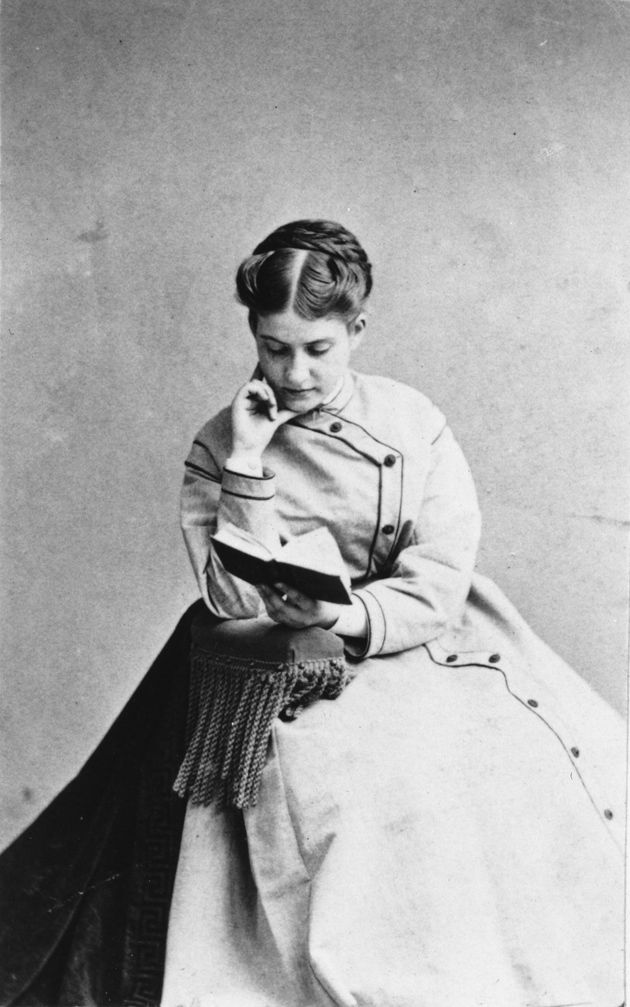
In 1876, James met his future wife, Alice Howe Gibbons. Twenty years later, he delivered one of his most famous lectures, “The Will to Believe,” which was at least partially inspired by his relationship with Alice. This lecture is largely remembered for being an argument for religion and faith. To James, similar to his belief in free will, even without factual evidence you can still “will” belief by simply believing something regardless. As you believe, your belief changes your worldview, validating it over time and making it real in its own way. One thing commonly overlooked, though, is how this lecture also ties into the process of making a relationship. He ends his lecture with this question, one that matters to almost everyone: “Do you like me or not?” I’ll let William James elaborate on this one, because I think he puts it best: “Whether you [like me] or not depends, in countless instances, on whether I meet you half-way, am I willing to assume that you must like me and show trust and expectation. The previous faith on my part in your liking’s existence is in such cases what makes your liking come. But if I stand aloof, and refuse to budge an inch until I have objective evidence, until you shall have done something apt, as the absolutists say, ad extorquendum assensum meum [to compel my assent], ten to one your liking never comes.” How many friends have you made knowing 100% that they like you? That you’ll like them? How many romantic relationships have you gone into knowing it would work out? That’s right—none. No one can see the future. No one can predict what will happen with 100% certainty. But do we make friends anyway? Do we date, fall in love, and even marry anyways? That’s simply what James is saying—when you want to become friends with someone, or date someone, you have to go into it assuming the best, assuming that the other person likes you. If you don’t, you won't make any friends or meaningful relationships. And who wants to live like that? And, maybe, through having faith, through believing without needing proof, you’ll start to make that love real.
Before ending, I want to clarify one thing about James’ philosophy, because I know it can be easily misconstrued. His philosophy is optimism, in a way—but it is not blind. He is not saying that the world isn’t often very sad, and awful, and that things can’t end badly. You may be dealt circumstances, but you are not dealt how you respond to them. In 2020, I responded to the depressing world events by thinking nothing could change, and in thinking this, I made it real. But didn’t I want things to be better, and to be happy? So I changed my mindset. And in doing so, the world became better for me—not because I changed it single-handedly, but because I realized moping only made it worse. This is what James talked about, the practical worth of believing; and for me, it was the belief that world can one day be a better place. I’ll end off with a quote from my favorite show, The Good Place, which I think summarizes this philosophy very well: “I mean, why not try? It’s better than not trying, right?”

No comments:
Post a Comment