MALA students: this is the site I've created to support my Intro to Philosophy courses. Feel free to browse here, and comment on anything you find of interest. jpo
UPDATE, April 16: Go to the new post titled Engaging American Philosophy to post your comments and questions about the assigned readings, and to indicate a presentation topic preference.
Engaging the Liberal Arts MALA course (my block Apr 17, 24)--
Block Title: Engaging American Philosophy
Block Description: This block introduces the classical American philosophical tradition of William James, John Dewey, Richard Rorty and others. It is a broadly pragmatic, humanistic, melioristic, and interdisciplinary tradition, oriented to action (not merely contemplation) in the public arena. It insists that thought without action is vacuous, while action without thought is reckless. It demands relevance from philosophy and the other liberal arts disciplines, and is unwilling to sacrifice meaning or happiness in the fight for a better world. We'll investigate the philosophers' views and how they might apply to our present situation and circumstances.
Week 1 Read the following selections and post (in the comments section on my CoPhi site, below) at least one discussion question and one comment pertaining to each: William James, Pragmatism Lecture 1 (FYI-a $6 paperback edition of this classic is available online, or a $.99 kindle version)... John Dewey, Take your pick... and my favorite passage in Dewey, from A Common Faith... Richard Rorty, Philosophy and the Mirror of Nature preface/introduction/ch1. GET YOUR PRESENTATION ASSIGNMENT.
Week 2 Read the following selections and post (in the comments section on my CoPhi site, below) at least one discussion question and one comment pertaining to each: Selections from contemporary sources like Martha Nussbaum, Take your pick; Rebecca Solnit, Hope in the Dark; Louis Menand, The Metaphysical Club; Doug Anderson, Philosophy Americana: Making Philosophy at Home in American Culture; Oliver, William James's "Springs of Delight: The Return to Life-preface and introduction. PRESENTATION (tell us what you've learned about your topic, what questions you have about it, and what question(s) you'd like the class to discuss)
Grade Distribution: 75 points participation (attendance, blog posts), 75 points report (classroom presentation on an assigned topic)
MALA 6010 Syllabus – Spring 2025

CRN: 14049
MALA 6010: Foundations of Liberal Arts II
Day/Time/Location: Thursdays 6:00 – 9:00 pm, BAS S 338
Course Coordinator: Dr. Janet McCormick
Office Hours: virtual – email me any time (janet.mccormick@mtsu.edu)
Office: Jones Hall 202
Course Theme and Overview
Engagement in the Liberal Arts
The Engaged Liberal Arts mindset is boundless as we continually uncover new methods to integrate a deep, humanity-driven focus into the pursuit of learning and discovery. It is about embracing the interdisciplinary nature of liberal arts to achieve a deeper understanding and address global needs. This approach highlights the core strengths of liberal-arts education: flexibility, creativity, problem-solving, communication, critical thinking, and analysis. It fosters a unique culture of learning, with a holistic vision of education designed to inspire a passion for lifelong learning. By immersing students in the arts, humanities, natural, and social sciences, it cultivates a comprehensive understanding of knowledge and emphasizes "higher-order thinking skills" such as intellectual independence, imagination, creative problem-solving, analytical and critical thinking, superior communication skills, and knowledge creation. Liberal Arts faculty are visionaries, advocates, scientists, artists, and innovators who produce knowledge, spark curiosity, drive economic growth, and promote social change. We encourage students to explore themselves and the world around them as global citizens dedicated to discovering their passions and talents and leading lives of engagement. This course provides diverse perspectives on “engagement” through the various disciplines within the Liberal Arts.
COURSE LEARNING OUTCOMES
Upon completion of this course, students will:
• Gain an understanding of the foundation of Liberal Arts disciplines
• Increase content knowledge of the Liberal Arts disciplines
• Develop a greater appreciation of the interdisciplinary approach to learning
• Improve the ability to read and write critically and at an advanced level
• Recognize the methods of knowing in various disciplines

This course is an experiential learning course. The course includes a hands-on learning project (applied learning, service-learning, creative activity, teacher education, laboratory, co-op, or internship). The course will count toward the requirements of the EXL Scholars Program that formally began on campus in fall 2006. MTSU wants to provide relevant real-world learning opportunities for students. Research shows that students are more engaged in learning when they can learn “by doing” and that these types of learning opportunities will provide experiences students can include on their resumes that will assist them in gaining employment and/or gaining acceptance into graduate programs. For more information about the EXL Scholars Program, check the website: http://www.mtsu.edu/~exl.
MT Engage Designated Course
This is an MT Engage course. The MT Engage program promotes active engagement in learning across educational experiences. In this course, you will participate in a beyond-the-classroom activity and submit at least one assignment to the D2L ePortfolio. You will receive important informational emails from MT Engage about ePortfolio training and how you can qualify for scholarships and cash awards. For more information, go to www.mtsu.edu/MTEngage.
ePORTFOLIO STATEMENT
As part of MALA and the MT Engage program, students will build an ePortfolio presentation showcasing their integrative learning. MT Engage offers ePortfolio training; see http://mtsu.edu/mtengage/student_resources.php for details. Students should be aware that ePortfolios are not to contain confidential personal information, and that a student’s unauthorized storage or use of copyrighted works or proprietary information in an ePortfolio is prohibited.
ePortfolio Privacy: ePortfolios are private until the box is checked to allow public access. This access continues until the box is unchecked. ePortfolios are not internet searchable until they are posted to a host webpage. Please upload a photo and a bio for your ePortfolio home page as soon as possible as a reference for your block instructors.
COURSE STRUCTURE
The course will begin with an introduction to the Liberal Arts and the M.A. in Liberal Arts program. The next 12 weeks will feature inspiring professors from six different departments or programs who will discuss their approaches to the topic of “the education of a good citizen” through their disciplines. Each individual professor will lead the class for two weeks and will assign readings and give assignments. Through these exercises and discussions, you will have the opportunity to learn fascinating subject matter while using approaches from different disciplines. You will also work on your reading, oral, and written communication skills. At the end of the course, professors and students will engage in a round table session in which you will work to bring together what you have learned about “the education of a good citizen” and different methods used to approach this topic during the semester.
ATTENDANCE
Regular attendance is essential, especially since this course only meets one day a week, and professors rotate every two weeks. If you must be absent, it is your responsibility to contact the coordinator and the professor to request the opportunity to make up your work (this may involve extra readings and assignments). Work may be made up only at the discretion of the block instructor. Please be aware that absences will negatively impact your attainment in the course as well as your grade. Make every effort to attend every class.
GRADING
The grading for the course will be based upon a weighted percentage system with a minimum of 0% and a maximum of 100% as indicated below:
Each professor will give you assignments and participation grades which will make up 15% of your grade. With six professors, this will make up 90% of your final grade.
Further, toward the end of the semester, you will write a 5-page essay reflecting on the ways your understanding of the notion of “knowledge” has been informed by the various Liberal Arts disciplines presented to you this semester. Your essay should draw on concrete examples from lectures and readings from the course, which will serve as your sources. This essay will be due at the roundtable and will be 5% of your grade.
Participation in the round table, including a brief presentation of your essay, will make up 3% of your grade.
You will also begin (or continue) the process of composing an e-portfolio. This will be 2% of your grade.
The following grading scale will be used:
A 940-1000
A- 900-930
B+ 870-890
B 840-860
B- 800-830
C+ 770-790
C 740-760
C- 700-730
D+ 670-690
D 640-660
D- 600-630
F 0-590
ETHICAL SCHOLARLY CONDUCT
Cheating, plagiarism, fabrication, and facilitation are unacceptable and will result in a grade of “0” for the assignment. For the purposes of this course, these terms are defined as follows:
Cheating - turning in work composed for other courses, copying the work of other students, using others’ work
Plagiarism - copying the words of an author without proper notation and acknowledgement
Fabrication - making up content and or sources
Facilitation - getting unauthorized assistance from others to complete your work
Violators may also be reported to the Assistant Dean for Judicial Affairs, without exception. Remember to start your papers early to avoid the temptation to resort to any of these offenses. If you have any difficulty with the material, please ask for help.
Please complete the Plagiarism Tutorial at the following site: http://lib.usm.edu/plagiarism_tutorial.html
ACCOMMODATION FOR STUDENTS WITH DISABILITIES
Middle Tennessee State University is committed to campus access in accordance with Title II of the Americans with Disabilities Act and Section 504 of the Vocational Rehabilitation Act of 1973. Any student interested in reasonable accommodations can consult the Disability & Access Center (DAC) website www.mtsu.edu/dac and/or contact the DAC for assistance at 615-898-2783 or dacemail@mtsu.edu.
RESPECT AND ELECTRONICS
Please abide by a policy of mutual respect for your instructor and your fellow students. Cell phones or any other electronic devices should be silenced, and texting or e-mailing should not be done during class. Students are expected to focus on the course material and contribute in a positive manner.
1st Day of Class – January 23
Course Overview w/MALA Program Director Dr. Janet McCormick
**reminder to attend at least one out of class Liberal Arts event to see some examples of how others present their research
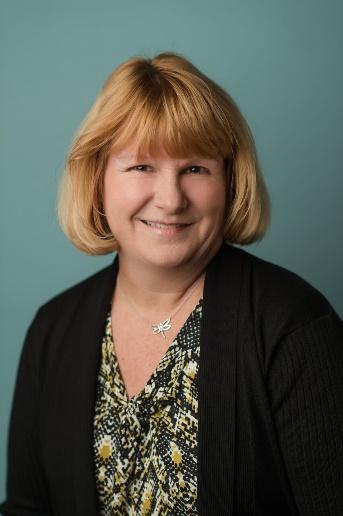
Bio: Dr. Janet K. McCormick | Faculty | Middle Tennessee State University (mtsu.edu)
Block 1 January 30 and February 6
Title
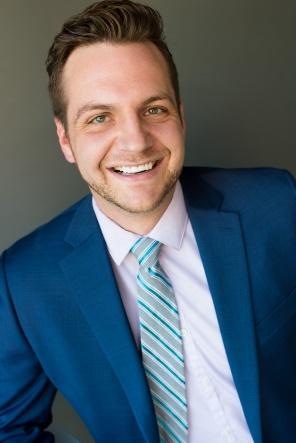
Dr. Will Perkins, Assistant Professor
School of Music – Voice and Opera
Will Perkins is a diverse performer who has enjoyed singing lead roles in opera, operetta, and musical theater. He is equally at home singing Mozart as he is performing barbershop or contemporary musicals. His undergraduate studies were completed at the University of Utah, and graduate work at Indiana University. During his time at IU, Dr. Perkins created a performing group for students from many disciplines to be able to take part in all aspects of the production process, including acting, singing, costume, set, and lighting design. In addition to being on the stage, Dr. Perkins is also a director, and his talents have been sought by Indiana University Opera Theater and Brigham Young University. In the School of Music at MTSU, he teaches private voice lessons, directs the Opera Theater, and teaches field-specific academic courses.
Block Description:
Week 1 Readings/assignments:
Week 2 Readings/assignments:
Grade Distribution:
Block 2 February 13 and 20
Title

Darren E. Levin, Associate Professor
Department of Theatre and Dance
Darren E. Levin joined the Department of Theatre and Dance in 2013. He earned his BFA in Theatre Design and Technology from Missouri State University (2007), and MFA in Theatrical Design (Lighting Design) from The University of Texas at Austin (2010).
Darren is an Associate Artist with Nashville Repertory Theatre where his lighting design credits include Avenue Q, Pipeline (First Night Nominee), Every Brilliant Thing Topdog/Underdog, Smart People, Posterity (Regional Premiere), Good Monsters (World Premiere), Rosencrantz and Guildenstern are Dead. Darren also designs extensively with Black Hills Playhouse, Green Mountain Opera Festival, Theatre West Summer Repertory, and Mountain Rep Theatre with credits including Side Show, Footloose, 9 to 5, Peter and the Starcatcher, The Rape of Lucretia, La Cenerentola, and She Loves Me.
Prior to joining the MTSU faculty, Darren served as the Assistant Technical Director and Lighting Supervisor for McCain Auditorium at Kansas State University. He has also worked with and designed for Cedar Point Live Entertainment/Cedar Fair Entertainment Corporation, Juanita K. Hammons Hall for the Performing Arts, and he toured with Feld Entertainment’s Disney on Ice.
Darren is a member of the United States Institute of Theatre Technology (USITT) where he serves as the Vice Commissioner for Communications of the Lighting Design and Technology Commission and as a council member for the Essential Skills for the Entertainment Technician (eSET) program. Darren is a proud member of United Scenic Artists 829 (USA829) and the International Alliance of Theatrical Stage Employees (IATSE) Local 205-Austin, TX.
Block Description:
Assignments Week 1:
Assignments Week 2:
Grade distribution:
Block 3 February 22 and 29
Title
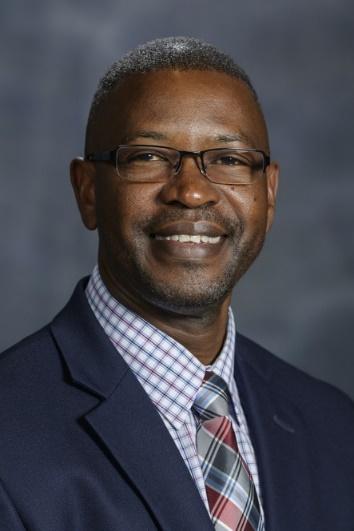
Dr. Francis Koti, Professor
Department of Political and Global Affairs
Francis T. Koti is a Professor of Political and Global Affairs. An urban geographer, Koti holds a Ph.D. in Geography from West Virginia University. Koti’s research revolves around the use of geographic information systems (GIS) within participatory methodological frameworks to understand urbanization processes. His regional focus is Africa. His work has been published in the field, particularly related to participatory GIS, African peri-urban development, urban and regional planning, local community resource use and access, and social and spatial exclusion in African cities. Dr. Koti has taught graduate courses in for over ten years with a focus on Geographic Thought and also Societal Implications of the use of geospatial information technologies (GITs). In addition to teaching Dr. Koti has over 8 years of academic leadership experience having previously held administrative positions as interim associate dean and department chair at the University of North Alabama and as department chair here at Middle Tennessee State University. He has previously served as co-founder and secretary of the US-based Kenya Scholars and Studies Association (KESSA), Secretary of the Southeast Division of the American Association of Geographers (SEDAAG), and guest editor of a special edition of Africa Today journal.
Block Description:
Assignments Week 1:
Assignments Week 2:
Grade distribution:
Block 4 March 20 and 27
Title
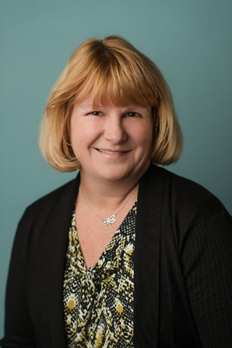
Dr. Janet McCormick, Professor
Department of Communication Studies
Dr. McCormick earned her BA, MA and PhD in Communication and has been teaching courses in higher education and conducting workshops globally for 35+ years. She spent 15 years teaching in Illinois, Kentucky, London, Buenos Aires and Singapore before joining MTSU in 2002. Her repertoire of expertise includes but is not limited to: public speaking, interpersonal communication, communication theory, leadership communication, intercultural communication, gender communication, small group communication, listening, organizational communication, communication consulting and auditing, communication training, communicating organizational change, conflict negotiation, persuasion, and interview communication. Her approach has been to creatively and enthusiastically incorporate EXL pedagogy (theory, skills, application, and reflection opportunities) into each section ensuring a quality course that diverse students will enjoy! She is the recipient of numerous teaching, advising and service awards for her dedication to the Communication profession and her ability to better prepare students for the global workforce. Since 2019, she has been serving as Director of the Master of Arts in Liberal Arts (MALA) program.
Block Description:
Assignments Week 1:
Assignments Week 2:
Grade Distribution:
Block 5 April 3 and April 10
Title
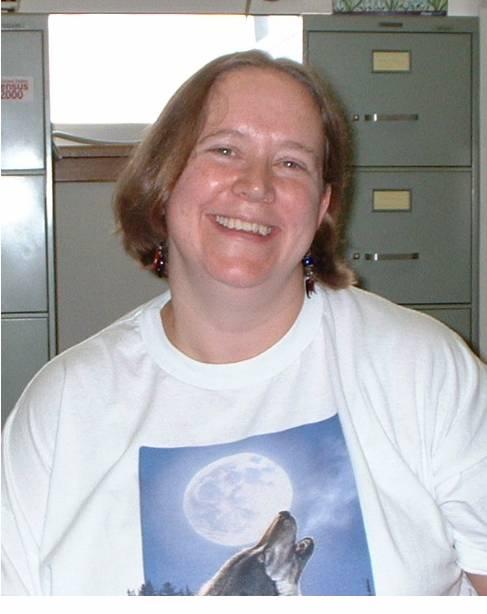
Dr. Angela Mertig, Professor
Department of Sociology and Anthropology
BIO
Block Description:
Assignments Week 1:
Assignments Week 2:
Grade Distribution:
*Block 6 April 17 and 24
Title
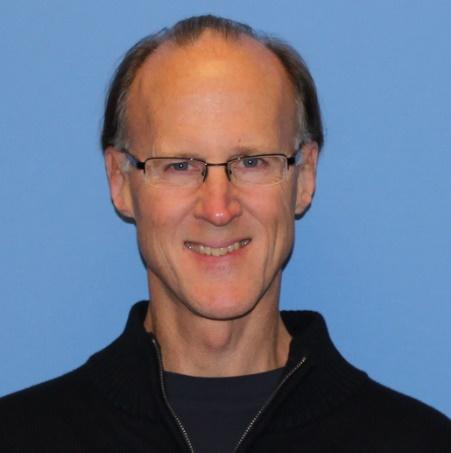
Dr. Phil Oliver, Professor
Department of Philosophy and Religious Studies
The author of William James's Springs of Delight: The Return to Life, Phil Oliver specializes in the American philosophical tradition with supporting interests in applied ethics (particularly Bioethics and Environmental Ethics), Anglo-American literature, history, humanism, naturalism, science and exploration, peripatetic ("walking & talking") philosophy, baseball, cycling, swimming, the pursuit of happiness, and the perpetual dawn of day. One of his favorite MTSU courses is The Philosophy of Happiness. He is academic advisor for minors in American Culture (American Studies). You can follow him on Threads (@OSOPHER) and on his blogsite Up@dawn but of course, as Immaneul Kant and Monty Python's Brian Cohen agreed: You don't have to follow anybody. "Sapere aude," have the courage to think for yourself. But not by yourself. Good philosophy collaborates and converses.
Block Description:
Week 1 Readings/assignments:
Week 2 Readings/assignments:
Grade Distribution:
Roundtable, May 8th
w/MALA Program Director Dr. Janet McCormick
For your final unit, you are required to write a 5-page essay reflecting on the ways your understanding of “Engagement in the Liberal Arts” has been informed by the various Liberal Arts disciplines presented to you this semester. Your essay should draw on concrete examples from lectures, readings and out of class experiences from the course, which will serve as your sources. Put in the dropbox when complete. This essay will be 5% of your grade (50 points).
Participate in the roundtable discussion (using d2l discussion board) – provide a brief presentation (powerpoint/prezi/worddoc all fine) of your essay and respond to each of your peers. This will make up 3% of your grade (30 points).
Submit a one-page reflection on an out of class Liberal Arts event you attended to see some examples of how others present their research. This will make up 1% of your grade (10 points).
Show progress on your e-portfolio. This will be 1% of your grade (10 points).
Sami Pihlstrom, Toward a Pragmatic Philosophy of the Humanities ebook Walker Liby
ChatGPT’s suggestions… Apr7... Handout...

Per introduction...
ReplyDeleteMy name is Hailey Reissner and I did my undergrad in Anthropology and am currently doing my masters in Liberal Arts. I am here to not only here to learn, but to share ideas and engage with those around me who are pursuing their own journeys. Philosophy is usually described as a way of life but through my experiences it is more of the way one thinks, carries themselves, and acts in everyday life. During the summer semester of 24, Dr. Oliver introduced me to different philosophers throughout the different ages, and the one that has stuck with me the most was Isocrates, not to be confused with Socrates. His beliefs and way of teachings were more communal, with nature, and open for anyone to listen, not just a select few. To answer the last question, yes, I have engaged with American philosophy before through a previous class with readings and assignments with Dr. Oliver.
Hi Hailey! Isocrates doesn't get nearly enough attention, does he? The confusion of names is partly responsible, probably needs a re-branding.
DeleteThis comment has been removed by the author.
ReplyDeleteMy name is Sandra Campbell, and I am taking this Foundations class to see how I might obtain a full master's degree, since I recently completed a graduate certificate in Archival Studies from East TN State University. I am employed at MTSU in the Procurement Logistic Office as an Office Supervisor. I enjoy engaging in the arts, especially music, theatre, history, geography, literature, and learning the origin of words we use in the English language. Philosophy is the study of a system of thought of a particular branch of knowledge. I am a lifelong learner who loves picking up new things, even outside my usual interests. I am especially curious about why we believe what we do. In my 30s, I became more spiritually aware and have faith in Bible principles. I do not think I have a favorite philosopher. I know of Socrates and the Socratic method, which aligns with how some information is relayed in the Bible. Many years ago (1989) I took an independent study course called History of Political Thought where I remember trying to read Plato and other philosophers. I don't think I enjoyed the course very much, but I was much younger then. :( .
ReplyDeleteHi Sandy. I spent a year in Johnson City, back in the early 90s. I look forward to hearing your impressions of the place.
Delete"Philosophy is the study of a system of thought of a particular branch of knowledge." The part of philosophy concerned with knowledge per se is Epistemology. Not my favorite part, to be be honest. Knowledge is fundamental of course, but epistemologists these days tend (in my estimation) to be a little too remote and technical, less accessible to non-specialists. And since philosophy is the pursuit of wisdom, it takes more than knowledge to achieve that. I've met some extremely knowledgeable people, including some academic philosophers, who I'd not consider particularly wise. And I've known wise people who lacked formal education.
Hello,
ReplyDeleteMy name is Jalen Walker. I recieved my B.S. in Visual Arts with a minor in Africana Studies in August 2023. I also began undergrad as a graphic design student prior to changing to visual arts. I decided to further my education by applying to the MALA program in March 2024 and began this academic journey in fall 2024. As someone with limited academic knowledge about philosophy, I think it mainly involves the fundamentals of life. Although I do not have favorite philosopher per se I am aware of well-known philosophers such as Aristotle and Siddhartha Gautama. Also with Aesop, the Greek fabulist and storyteller, I enjoyed reading his collection of fables when I was younger. I have engaged with American philosophy previously, if academically it has been a while.
Hi Jalen. Aesop is not often mentioned as a philosopher but his fables always came with a moral, right? And morals in that sense are offered as instances of wisdom. So of course he was a philosopher. (My first introduction to him was the cartoon version, Aesop's Fractured Fables. Anybody here old enough to remember that?)
DeleteCorrection: Fractured Fairy Tales https://www.youtube.com/watch?v=socyxYAPI38&list=PLVmT9L3J0Tuce1F4gdQTSBt10SxseMdxZ&index=1
DeleteI am Juvy M. Burns, and I became interested in taking this Foundation Class because it has been a decade since I have been in school after finishing my graduate degrees. I love learning and especially learning new things. I love arts in general: I love singing, music, arts, arts, theater, poetry, watching people display their talents and passions in various shows and musical concerts, and the like. I want to learn more and explore the various disciplines in Liberal Arts and be able to share my knowledge and engage more freely with a diversified group.
ReplyDeleteIn simple terms and understanding, philosophy means “wisdom.” It is knowing and understanding who I am, the world I live in, and the people surrounding me, as well as understanding why people do what they do and their interrelationships. I also know that Philosophy goes deeper than that, which I am excited to know and learn about. I do not have a favorite Philosopher. Still, I love King Solomon in the Bible for his wisdom and the truths and realities he has written that apply to all and transcend ages, races, ethnicities, and nationalities, the application of which is up to us to embrace or ignore. Consciously or unconsciously, I do not think I have ever engaged with American philosophy yet.
What I love about MALA: y'all almost always declare your love of learning, unabashedly. It's the very rare 18- or 19-year old undergrad who will say that (in front of their peers, anyway).
DeleteRemind me to show you my American Philosophy site in class tomorrow, if I forget. Or you can check it out on your own if you want: https://amphilos.blogspot.com/
ReplyDeleteAlso remind me to talk about how I first became "engaged" with American philosophy (though I'm unlikely to forget)...
DeleteA navigation tip, if you need to get back to this page and have misplaced the link: just enter "mala 2025" in the search box in the upper left of this site, cophilosophy2.blogspot.com.
ReplyDeleteA heads-up: I'm not feeling terrific today, but so far am not feverish. If that changes and I can't make it in, I'll notify you here and atop this page (upper right) in the NEXT section.
ReplyDeleteThank you so much, Dr. Oliver, for the input. I am looking forward to getting myself engaged in American Philosophy.
ReplyDelete
ReplyDeleteI am Amanda Triplett and I received my BA in English Literature in 2013 from MTSU. I decided to pursue graduate school and the MALA program because of my life-long love of learning. With this degree, I would like to be able to contribute my own research and scholarship to the field of Pop Culture and Fan Studies. While my main focus is literature and film, I enjoy learning about the various disciplines in Liberal Arts such as history, geography, anthropology, and philosophy. to me, philosophy is a way for us to understand ourselves and how we interact with others and the world around us. I don't necessarily have a favorite philosopher. My experience with philosophy is using it in the realm of theory and criticism for literature and film. In that sense, I have engaged a little bit with American philosophy for my English degree with reading some of Martha Nussbaum and others for my theory and criticism class.
Given your interest in literature, Amanda, you might be interested in my upcoming July course "Philosophy in Recent American Fiction" (an expanded version is also projected for Spring '26).
DeleteAfter you've all posted your introductions (etc.) here, go to the new post called "Engaging American Philosophy"* to post your comments and questions about the assigned readings and to indicate your presentation topic preferences.
ReplyDelete*https://cophilosophy2.blogspot.com/2025/04/engaging-american-philosophy.html
My name is Markeem Tyler, and I’m from Springfield, Tennessee. I’m one of four sons and now a father to four children of my own, so I naturally consider myself a family man. But does that really say who I am? That tells you the name I was given, where I’m from, and a little about my role in a family—but not much about me as a person.
ReplyDeleteSo, who am I? I’d say I’m a conscious being trying to make sense of the world. To me, philosophy is about understanding your surroundings and gaining deeper knowledge about life. I’m here because I believe there’s more to learn than just how to fit into a job title—I want to grow beyond that. While I am pursuing a master’s degree, my real goal is to shift the way I see the world and, ultimately, create positive change.
I don’t have a favorite philosopher yet, or a clear personal philosophy—but maybe by the end of this block, I’ll be able to name one and explain why it resonates with me. This is actually my first real dive into philosophy. I may have come across bits and pieces in books or articles before, but I’ve never focused on it—though I expect that to change with this course.
You're clearly predisposed to philosophical reflection already, and have arrived at something like the position Wm James called "meliorism"--the commitment to try and "create positive change" and thereby ameliorate some of the world's woes. Maybe he or the other pragmatists will become some of your favorites.
DeleteHello! My name is Ashley Eady. I received a Bachelor of Music (with a double major in French) in 2014 and a Master of Art in Journalism in 2017. As someone who comes from a diverse academic background, I’ve always been attracted to the Liberal Arts. I genuinely enjoy learning new information about a variety of subjects and don’t like to limit myself to one area of study. What I love most about MALA is the interdisciplinary nature of the program. I came here for the opportunity to expand my knowledge into other areas of the Liberal Arts, especially History.
ReplyDeletePhilosophy is the love of knowledge – a combination of the Greek words ‘philo’ (loving) and ‘sophos’ (wise). I think of philosophy as a discipline or way of being that encourages us to ask questions about the nature of reality: Who are we? Why are we here? What is the meaning of life? Etc. I haven’t engaged in much American philosophy. Although I do remember reading a bit of Ralph Waldo Emerson in high school and enjoying it.
Knowledge is crucial of course, but I actually think wisdom is a broader category. It's not just what you know, it's what you do with it... and with the vast territory of all that we don't know.
DeleteI too appreciate the interdisciplinary approach MALA takes to Humanities education. We all spend so much time in our separate silos, we academics, I envy the opportunity you've had in this course to be serially exposed to so many different fields of study in the Liberal Arts tradition. I hope y'all will share some of your takeaways from those earlier sessions here.
Hello, I am Shirley Mack and I am here in the MALA program because it aligned with what I needed to accomplish a life goal of obtaining my master’s degree. I am a Social Work undergrad major, but when I graduated from MTSU there was no Social Work master program and because my husband was critically ill, I didn’t have the ability to travel to Nashville where the nearest program was. I made the decision to begin my master’s in Sociology but was unable to complete the process due to life’s obstacles presenting. Ironically enough the MALA program was a new program when I returned to school and was just what I needed to accomplish my goal. Philosophy is the study of the fundamental nature of knowledge, reality and existence and I view this as while we move through life, we gain wisdom and knowledge that can be applied to our future experiences. I have always associated philosophy with religion, but my favorite present day philosopher is Cornel West, who recently left Harvard after many years there, and he posted an excerpt from his resignation letter on Twitter which reads “The school’s “narcissistic academic professionalism,” “anti-Palestinian prejudices,” and what he saw as indifference toward his mother’s recent death constituted “an intellectual and spiritual bankruptcy of deep depths.” While my personal philosophy is “you will definitely reap what you sow”, I agree with West’s philosophy that “The unexamined life is not worth living”. I have engaged with American philosophy in reading.
ReplyDeleteHello! I am Erica Senecal. I have a BS in Elementary Education. I was a wife and stay-at-home mom for most of my adult life. I've wanted to return to school for a Master's for many years. With my youngest of three children nearly done with high school, and being a divorcee, now seemed like the right time to dive into something new.
ReplyDeleteI've chosen MALA because I have a passion to learn, and Dr. M's passion for MALA pulled me in. LOL. I started last Summer and did take your course on American Philosophy. I remember feeling so new and so scared, having been out of school for over thirty years. Being at MTSU in this program is exactly where I need and am glad to be.
Having taken your class last summer, I am now a fan/follower/believer in William James and his fellow like-minded philosophers. I am also interested in learning more about the female philosophers they associated with. That was my project at the end of the summer course, and I thoroughly enjoyed it. Part of the reasoning for that is because I am learning more about myself now that motherhood and wifehood don't need to be priorities, I am concentrating on me, including what I believe.
Your class was quite empowering for me. I look forward to engaging with you and my classmates tonight and next week.
Hello, I'm Caleb T. Cowan-Austin. I graduated with my BS in Art History here at MTSU in Spring 2024. My ultimate goal is to be an Art teacher at a high school hopefully here in the great state of Tennessee. I have a passion for Art and inspiring the creativity for Art so why not do both and be an Art teacher? That's me in a nutshell.
ReplyDeleteI decided to pursue the Master's Program right after I graduated with my Bachelor's in regards to obtain a higher degree in order to teach high school level. I chose MALA because I am quite naive to the real world and I felt like Liberal Arts pertains to all departments that matter and would reawaken my renewed view on reality. Art is limitless and diverse, but it is EVERYWHERE in all shapes mediums, and Liberal Art departments. Speaking on a philosophy perspective, this is what I believe in. Art is a catalyst for Philosophy too! How Bizarre!
When one thinks of a famous philosopher, they immediately think about Socrates, Plato, Karl Marx, and/or Aristotle. However, as an Art History major, I think about Voltaire and Jean-Jacques Rousseau who sparked the Enlightenment movement which was a renowned art movement for artists. Voltaire's writings emphasized the importance of reason, freedom of thought, and tolerance, all of which was crucial for artistic expression and the creation of meaningful work in the 18th century. Voltaire's advocacy for these values challenged traditional authorities and encouraged individuals to think for themselves, which resonated with artists who often sought to challenge established norms and express their unique perspectives.
I've engaged in some American Philosophy before, but only with readings on W.E.B. Du Bois and Henry David Thoreau. Unfortunately, these readings and discussions were years ago so my memory isn't as good on this particular subject now.
I look forward to these upcoming lessons on American Philosophy!
Hello! My name is Rachael White, and this is my first semester as a graduate student in the MALA program. I have always lived in Murfreesboro, TN my whole life. I am taking this MALA course to know more about the liberal arts disciplines at MTSU. I find that all have contributing factors to enhance one's knowledge. This past August I graduated MTSU with a History B.S. In history, philosophy has come up a handful of times to dive into a different perspective such as Thoreau and Greek philosophers.
ReplyDeleteI have been a lawyer in Nashville for last 20 years. I think we are all philosophers to some extent. I read A Theory of Justice by Rawls years ago and have read several of the works of W.E.B. Du Bois but I will not claim knowledge in philosophy. This is my first class in the MALA program and I am just exploring going back to school after many years away from any studies, and technology has changed so much over the years that it is almost alien to me, so that is one of my biggest challenges in a return to studies.
ReplyDeleteWeek 2-
ReplyDeleteHope in the Dark by Rebecca Solnit
Discussion Question: Does her view on historical uncertainty change our ways of viewing social movements today?
Comment: I have studied intensely about 2003 in America and the Middle East in one of my history courses. I understood her perspective and view of writing this.