Presentations-
-#1 Vi Nobles-Schopenhauer & Indian philosophy. Zane-Hegel. Lanisa-Bentham. #2 Geena Caprio-Happiness. Lindsey Eavey-Kant. Tyler Scherr-Hegel. Nev Herzog-Bentham. #3 Young Zhang-Hegel. Spencer Hebel-Kant. Thomas Hemstalk-Bentham
LHP
1. Kant said we can know the ____ but not the ____ world. Can we?
2. What was Kant's great insight? Is this a credible form of "armchair philosophy"? Or does it also depend on experience?
3. What, according to Kant, is irrelevant to morality? Is it really?
4. Kant said you should never ___, because ___. Kant called the principle that supports this view the ____ _____. Have you ever violated this principle? If so, do you regret it?
5. Who formulated the Greatest Happiness principle? What did he call his method? Where can you find him today? If everyone followed this principle would it be a better world?
6. Who created a thought experiment that seems to refute Bentham's view of how pleasure relates to human motivation? Would you opt for the machine? Why or why not?
7. What did Hegel mean when he spoke of the "owl of Minerva"? What did he think had been reached in his lifetime? What would Socrates say about that?
8. What Kantian view did Hegel reject? What would Kant say?
9. What is Geist? When did Hegel say it achieved self-knowledge? Does this seem supernatural and mystical to you, or could it be naturalistic?
10. What "blind driving force" did Schopenhauer allege to pervade absolutely everything (including us)? Could anyone really know that?
11. What did Schopenhauer say could help us escape the cycle of striving and desire? Is that the only way? Is that cycle really universal?
Kaag ch4
1. Tragedies that befell him in his 40s led to James's quest for ___.
3. What did James think is sacrificed when we study the mind in objective analytic terms?
4. What did Thoreau say at the end of Walden?
5. His experiments with nitrous oxide gave James what warning?
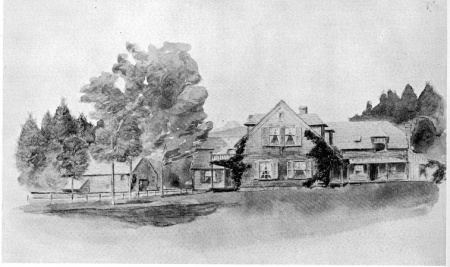
6. What did James say about his house in Chocorua?
Weiner ch5
- What was teenage Arthur Schopenhauer's worldview? What sort of world (by contrast with Leibniz/Pangloss) did he think it is? Do you, or have you ever, felt the same way?
- What kind of listening mattered most to Schopenhauer? Do you share his attitude about that?
- In what sense was Schopenhauer an Idealist? What analogy (similar to one I've suggested applies to Leibniz's monads) does Nigel Warburton suggest characterizes it? Does it seem reasonable to you?
- What are some different names philosophers have applied to the allegedly more real (than sensations) world of Ideas? What "dark twist" did Schopenhauer add?
- How did Schopenhauer say we can escape Will and "shake off the world"? Do you want to shake it off?
- What did Schopenhauer have in common with Rousseau? Do you think his affection-starved childhood may have contributed to his eventual philosophy?
- How does art differ from pornography, on S's view? What's your view?
- Weiner thinks Schopenhauer's Will made manifest in our time is what? Do you agree?
HWT
1. What one word most characterizes the ideal Chinese way of life?
2. Western suspicion of hierarchy is built on what?
3. What did the late Archbishop Tutu say was "the greatest good"?
4. What omission in western ethics would seem bizarre to the classical Chinese thinkers?
5. What is the most famous Confucian maxim?
6. Virtue is never solitary, said Confucius, it always has ____.
FL
1. How, according to Scientific American in 1915, are motion pictures like drugs?
2. What came into existence simultaneously with America and created the concept of celebrity?
3. What place did film critic Pauline Kael call a "fantasy-brothel"?

1. Kant said we can know the ____ but not the ____ world. Can we?
ReplyDeleteKant said we can know the phenomenal, but not the noumenal world. We could potentially know the noumenal world if there was some way to objectively test its properties, like a science experiment. However, since by definition anything that humans perceive is part of the phenomenal world, any results of this experiment would not be objective. I believe that this statement about the phenomenal world being the only one we can know may be true, but it is not significant.
3. What, according to Kant, is irrelevant to morality? Is it really?
Kant believed that emotion is irrelevant to morality. He believed that doing the morally right thing was a result of a logical process rather than “feeling” like it was the right thing to do. I partially agree with this, but I don’t believe that it is entirely true. I do believe that doing what is right is logically the best and most moral thing to do. However, there is nothing wrong with doing the right thing just because it makes you feel happy.
6. Who created a thought experiment that seems to refute Bentham's view of how pleasure relates to human motivation? Would you opt for the machine? Why or why not?
Robert Nozick created this thought experiment. It described a machine that created only pleasurable experiences in a person’s mind. I would not opt for the machine. I believe that it is the unpleasant and difficult parts of life that make the enjoyable experiences worth having. Living a life of nothing but bliss inside of a machine would 1. be completely pointless and lead to nothing of significance to show at the end of one’s life, and 2. completely ruin one’s perspective of what is a pleasurable experience. If a person experiences nothing but pleasure all the time forever, then their experience of feeling what is good and bad has been irreversibly skewed. This is why I believe that having unpleasant experiences is just as important as having pleasant ones. Keeping a balance is what gives a person perspective.
1. Kant said we can know the ____ but not the ____ world. Can we?
ReplyDeleteWe can know the phenomenal world but not the noumenal world. The phenomenal world is the world that we experience through our senses, and the noumenal world is the world beyond that. I think I mostly agree with Kant here—we can only know reality through how we perceive it, and we perceive it through our senses. If the phenomenal world is the world through our senses, how would we be able to perceive the noumenal world? It seems like everything we know about the world is one way or another found through our senses, so I must think the world that we perceive is the world through our senses. I think it’s possible for the noumenal world to exist, but if it can’t be perceived by our senses, I’m not sure how we could ever perceive it.
3. What, according to Kant, is irrelevant to morality? Is it really?
Sympathy is irrelevant to morality, or more specifically, Kant thinks emotion should be irrelevant to morality. You should do what is right because it is your duty to do what is right, not because of an emotional response. I think emotion sometimes does have to impact morality. There’s a difference between being bluntly honest and being truthful but being kind. I think it’s important to do the “right thing” with some exceptions based on the outcome of what doing the “right thing” would cause—if my friend is asking for my honest opinion on something, I’ll probably be honest. If my friend is really excited about something and shows me, I should be kind.
5. Who formulated the Greatest Happiness principle? What did he call his method? Where can you find him today? If everyone followed this principle would it be a better world?
Bentham formulated the Greatest Happiness principle, called Utilitarianism. You can find his body with a wax head at the University College London. I think this principle runs the risk of people giving in to their selfish wants instead of doing things to help others. If everyone focused on their own best interest all the time, helping someone else would be an inconvenience, so they wouldn’t do it. I think it’s important for people to be willing to help others even if it means it doesn’t maximize their own pleasure.
LHP
ReplyDelete1. Kant said we can know the ____ but not the ____ world. Can we?
Kant said we can know the phenomenal world but not the noumenal world. I don't know if I agree with this statement completely, based on Kant's definition of the "noumenal," but I do see where he's coming from. A lot of what a person experiences is shaped in some subconscious way that makes their outlook (or "rose glasses") unique from other people's. Factors like culture, environment, and biology all impact how we experience different things; those experiences then affect the tint of our rose-colored glasses.
Furthermore, I definitely agree quite a lot of the world is beyond our perception- a "noumenal" world, if you please. There exist wavelengths invisible to human eyes, sounds beyond our ability to hear them, and forces detectible to other organisms that escape us completely. The world other animals occupy differs greatly from our own. So in that aspect, I agree with Kant.
However, where he loses me is the idea that the phenomenal world is somehow a distortion created by the human mind in its inability to perceive the noumenal one. To me, this comes a little bit too close to Plato's allegory of the cave, or Pyrrho's extreme skepticism. Just because we can't perceive all of reality doesn't mean that the parts we can perceive are an illusion. Second, the fact that people are aware of the existence of things they can't naturally sense means that it is possible to gain an understanding of things beyond what our "filter" allows. Observation, scientific research, and the use of technology has allowed humans to make observations about things beyond our own phenomenal understandings of reality, like wavelengths beyond visible light, or magnetic fields. Does their discovery and observation then make them part of the phenomenal? Or are they further illusions created by our warped understanding of the noumenal?
3. What, according to Kant, is irrelevant to morality? Is it really?
According to Kant, emotions are irrelevant to morality. Doing something because you feel emotionally compelled do doesn't make you moral. What matters is the logic behind the action, and whether you carry it out regardless of your feelings towards the matter because you've judged it to be the right thing to do.
I think there is a lot of sense in this position. Doing something emotionally difficult like making personal sacrifices of time or money to help another person is moral because it goes against your selfish instinct, but you've reasonably judged that it is the right thing to do. Making a moral decision is easier when you're able to put aside your own feelings on the matter and look at things objectively. You can ask yourself, "What are the benefits? What are the drawbacks? Will this hurt or help people?" and make decisions based on logic, rather than judgement clouded by emotion.
4. Kant said you should never ___, because ___. Kant called the principle that supports this view the ____ _____. Have you ever violated this principle? If so, do you regret it?
DeleteKant believed that you should never lie, because it is always morally wrong. He called this view a Categorical Imperative. I have of course violated this principle, as I'm sure every other person on the planet has, and probably regretted it before, but there are just as many instances where I do not regret lying.
I think the reason I disagree so strongly with this principle is because it operates on the assumption that an action can be inherently amoral in nature. I don't think this is the case. Morality (or a lack thereof) is a completely human-invented construct and has basically no applicability outside of our society. Sure, rampant murder and infighting is not practiced widely among members of the animal kingdom, because it does more harm than good. But in careful practice it serves the important purpose of weeding out the weakest from the strongest of a bunch, contributing to the species' continued survival. Acts that we consider "amoral" can serve a purpose. Is an elk amoral for butting antlers with a rival male, or even killing him? I certainly don't think so.
5. Who formulated the Greatest Happiness principle? What did he call his method? Where can you find him today? If everyone followed this principle would it be a better world?
Jeremy Bentham formulated the Greatest Happiness principle, a way of calculating how to act based on how much pain and pleasure it will bring about. He called this method the Felicif Calculus.
I think there is a truth to this philosophy, but only if it is applied to other people as well as yourself, otherwise you run the risk of everyone acting in their own self-interests all the time. In order for utilitarianism to function as a way to make the world a more pleasurable place, people have to consider how much pleasure or pain their actions will inflict on others. It is easy and often more pleasurable to disregard others' feelings. But I think this would be a misapplication of Bentham's utilitarianism. A moral person, according to Bentham's philosophy, may act in a way that brings themselves pain if it serves the greater purpose of bringing other people pleasure. When calculating the relative pains and pleasures that may result from any action, you must consider an action's impact on others and make your decision from there.
Section #1
ReplyDelete2) What was Kant's great insight? Is this a credible form of "armchair philosophy"? Or does it also depend on experience?
Kant's great insight "was that we could, by the power of reason, discover features of our own minds that tint all our experience" (Warburton 114). I, and evidently Warburton, would argue that this is a form of armchair philosophy. Based on my understanding, Kant is reflecting on experience. He relies on reasoning and thought to make discoveries about reality. To me, even armchair philosophy is dependent on lived experiences. The rose-tinted glass in my phenomenal world may lead to different armchair conclusions than Bob's mint-tinted glass. (I'm a little confused as to whether this is the core of Kant's philosophy, and whether I misunderstood it.)
7) What did Hegel mean when he spoke of the "owl of Minerva"? What did he think had been reached in his lifetime? What would Socrates say about that?
To my understanding, by saying "the owl of Minerva flies only at dusk," Hegel is implying that philosophy, history, or wisdom cannot predict or provide insight about the future (necessarily), but it can expound on and reflect on what has already happened. I would argue that those reflections could be used to nurture a better future, though.
Sidenote comment: I asked ChatGPT about Hegel's Owl. Here is a short section I found interesting: "Hegel believed history is not random chaos. It is rational. Events may look messy — wars, revolutions, collapses — but behind them is a logical development of human freedom. The owl of Minerva symbolizes the moment when philosophy recognizes: What historical forces were at work, what level of freedom was achieved, why events unfolded the way they did.
Philosophy doesn’t create reality — it comprehends it."
Comment) I can see where Kant is coming from when he says "sympathy is irrelevant to the morality of... action." But why conclude that a good deed facilitated by emotions is not moral at all? That's like saying philanthropic work is not "good" if you did it just to get rid of money you had lying around. Sure, someone who makes the greater sacrifice to do the right thing is arguably more "moral," but that shouldn't dissuade others who are moved by emotions, feelings, etc., from doing a good deed.
Section #1
ReplyDelete1. Kant believed we can know the phenomenal world, what we can experience via our senses, but that we will never be able to understand the noumenal world, which is reality. The world we see and touch and hear is only an appearance, and the true version of it exists elsewhere. This sounds a lot like Plato’s Realm of Forms. I don’t fully understand the point of this line of thinking; maybe there is a more perfect reality behind this world, but everything in this world seems real enough to me. I think we have our senses for a reason, and while they are not always completely accurate, they’re what we’ve got.
2. Kant believed that emotions are irrelevant to morality. Some people feel compassion for those in need, and so they help them, others don’t and help them anyways. I think our emotions are an important part of who we are and how we function as humans, so I don’t think we should discredit them and try to separate them from morality. However, I like his perspective that moral actions are something that you do regardless of how you may be feeling or whether or not you want to.
3. Bentham believed humans’ choices were driven towards pleasure and away from pain, and that is how to obtain a happy life–find more pleasure than you do pain. Robert Nozick’s thought experiment was a machine that created a virtual reality where life was perfect. Even though they could have whatever they wanted, most people would not choose to spend the rest of their lives “living” in this reality, because there are things in this world for them to do. Nozick’ s machine reminds me of Inception, and of people who spend so long talking to generative AI that they forget it’s not a real person, and they begin to lose the ability for social interaction. I would not choose the machine because that life feels too artificial. I would never actually travel the world or build relationships with other people, I would only think that I am, and I don’t want that.
#1
ReplyDeleteFirst of all Lemons aren't bitter! They're sour, get it right.
They can have bitters (used primarily in alcoholic beverages) but they are sours. I someone who both took AP Psych where we went over the flavors and who will eat a slice of lemon if you give it to me, I'm offended.
Also, I remember the panopticon from Dr. Who! That was the Time Lord parliament. Funny someone thought Bentham's prison makes a good place for politicians.
Now that that is out of the way, let's continue.
"I have a sibling for that" strikes again!
3.What, according to Kant, is irrelevant to morality? Empathy.
Is it really?
My opinion: When you define morality as he did... Kant was definitely onto something, although likely trying to self justify. I have a sibling who for the longest time struggled to learn empathy, so I get where he's coming from with the 'not everyone so lucky to become happy from doing good' and 'doing something that ultimately ends up being good-- simply because it makes you happy, doesn't make you a 'good person' it makes you a selfish one.' There must also be the acknowledgment of 'this is the right thing to do AND it happens to make me happy' because if you only searched for happiness, it would eventually lead you wrong-- especially if that happiness wasn't coming from empathy but instead from something else! Following that logic, its easy to see why he says someone who doesn't get the serotonin boost from being nice is actually less selfish and more good than someone who is auto rewarded and has been trained by that serotonin boost into being good. One is choosing to follow a moral imperative, the other a moral imperative (hopefully) and their own desire to feel good.
Now, does that mean you shouldn't lie to a murderer who's looking for your friend? If you wanted to be a good person, just shut the door in their face. No need to give an answer, then you don't have to lie. Another option "Do you really think I'd tell you that?" Seriously, just pull a Fae Lord. Don't lie, be cryptic. It would make the world a much more amusing place if everyone pulled that.
All in all, Kant sounds like a few of my siblings. Bet you $100 he had autism.
Bentham... I have a few questions: First of all... doctors have been trying to quantify pain for years, but everyone's pain tolerance is different (and many groups suffer from doctors being stupid about this). Similarly so, everyone's pleasure tolerance will also be different- what makes you content might make me ecstatic- what I might see as a small setback for you (and there by classify as a -1) you might see as devastating loss and a -7. I can't be trusted to quantify your pain, certainly not before you experience it! And can you ever know your pleasure/pain max? What if you thought you experienced a 10 before, but found something even better- is that earlier 10 nullified? Can you retroactively claim that was a 9? What if that messed with your calculations so that you shouldn't have done it? Should you feel guilty for making that decision when you thought it would be a true 10?
DeleteOn that topic, even if we do make a line of pleasure and pain where you dump a certain amount of dopamine into someones head and say "this is a ten, what is everything else compared to this?" Children will be way out of whack because they haven't experienced certain pains and pleasures in life. They get overwhelming joy and despair from the simplest things. If they self report-- they'll skew your whole scale, but if someone else reports for them, that could become very dystopian very quickly, but if they don't get a voice at all... *winces* also very dystopian.
Now, if it was simply ones and zeros, then that makes things easier. And I like that you included animals-- good on you! but... What about pain that makes people happy? Happy tears for example. Things that hurt, but are also healing. Is that pain? Is it pleasure? Is it a 1 or a 0? Can we get a 0.5? And you're still dealing with the fact that you *know* what all these other people will individually experience from this.
Finally: what about Competitions? Scholarships? Lotteries? 1, 2, maybe 3 people become ecstatic. The rest are a mix-- they were happy or at least hopeful while playing, but now they're likely disappointed that they lost-- which is a source of pain. Does every little pain count? Does every little bit of happiness?
9. I always translated geist as ghost, "ghost of the times" "spirit of the times" "mind of the times" I can see the similarities. Plenty of words don't have exact definitions in other languages-- which is one of the reasons learning a foreign language is such fun! When you start to grasp the true meaning behind their words, you suddenly have a whole new outlook on the world!
Anyways, Hagel said we'd achieve it only at the end of all things. Boy wanted a fairy tale ending to his story. He wanted to see things from a Christian god's eye view. But I suppose if we were to truly understand the reason everything had to be the way it is, it would have to be taking it into account at the very end-- or in true Isekai fashion-- repeating the same life so many times that you start to notice the patterns and story arcs. Both are equally likely in my mind.
Why did I even try. I knew it would be way too long.
Section #1
ReplyDeleteLittle History of Philosophy
3.) Kant believed that emotions are irrelevant to morality, and he used the idea of helping a bleeding stranger as an example. Kant believed that someone who helping the bleeding man, but was disgusted, had more morals than a person who helped the bleeding man and held compassion for the stranger. I disagree. I believe anyone who would help this bleeding stranger would have good morals. Whether they acted on emotion or not, they still have good morals, because they did a good action. Yes, one may mainly be acting on emotions, but the emotional one didn’t feel sorry for the man and still turn him away. Anyone who would look at the bleeding man and tell him to find help on his own would be someone with bad morals, in my opinion.
4.) Kant believed you should never lie, and he put this into something called a categorical imperative— which is something that instructs you. I have violated this, and sometimes I do feel guilty, but other times it’s for the better. I mean… some lies are better than telling the truth to everyone. That doesn’t mean I’m always a dishonest person, but I do have to act dishonestly at times. I believe everyone has lied once in their life, even if they don’t realize it.
11.) Schopenhauer believed we could briefly stop the striving with art— music being the main source. Many composers and novelists appreciated this view. I don’t agree it’s the only way to escape, however, music can be a distraction from temporary life problems. It can be a way to tune everything and everyone out, if you’re listening to the right things. Music could also make the striving worse, depending on which genre you listen to.
1. Kant said we can know the ____ but not the ____ world. Can we?
ReplyDeleteKant said we can know the phenomenal but not the noumenal world. I don’t think we can know the noumenal world just due to the way our brain is built. With the way our brain is structured we can only observe things how they appear to us, not how they exist independent from us. Also the actual definition of “phenomenal world” is the world we are aware of, so if we were to become aware of something “noumenal” it would become “phenomenal”.
3. What, according to Kant, is irrelevant to morality? Is it really?
According to Kant, emotion is irrelevant to morality. He believed that doing the morally correct thing is more of a thought process rather than an emotional response. I think emotion can have an impact on it at some points, but there can be situations where it triggers a thought process over an immediate emotional reaction.
6. Who created a thought experiment that seems to refute Bentham's view of how pleasure relates to human motivation? Would you opt for the machine? Why or why not?
Robert Nozick created the thought experiment that seems to refute Bentham’s view of how pleasure relates to human motivation. I would not opt for the machine. Just like Nozick argued, I find value in actually doing things for myself and having authentic experiences over the pleasure of an easy life that would come from being plugged into the machine.
Section #1
ReplyDelete5.) The Greatest Happiness Principle was formulated by Jeremy Bentham. He argued that the right action is the one that produces the greatest happiness for the greatest number. He called his method the “felicific calculus,” which was meant to measure pleasure and pain almost like a math problem. Today, you can still find him at University College London, where his preserved body, known as the “Auto-Icon,” is displayed. If everyone truly followed this principle, the world might be more focused on reducing suffering overall, but it could also ignore individual rights if sacrificing one person increased happiness for many.
6.) The thought experiment that challenges Bentham’s view was created by Robert Nozick. He described the “Experience Machine,” which could simulate any pleasurable life you wanted. This seems to refute Bentham because it suggests that pleasure alone is not all we value. Personally, I would not choose the machine, because most people want their experiences to be real, not just artificially produced feelings. It shows that meaning and authenticity matter just as much as pleasure.
7.) When G. W. F. Hegel talked about the “owl of Minerva,” he meant that philosophy only understands things after they already happened. Basically wisdom shows up late. He thought that history had kind of reached its peak in his own time with the modern state and everything becoming more rational. If Socrates heard that, he would probably just start asking questions and pointing out that no one ever fully understands history while they are living in it. He would say we still dont know as much as we think we do.
Kant said that we experience the phenomenal world but never the noumenal world. I could get behind this, I feel like people perceive things differently. Everyone experiences and perceives things differently and that influences life more than the thing itself. I'm sure thats not necessarily what he means, it's just kind of my take on it.
ReplyDeleteKant's depiction about morality not being about what you do but why is really impactful to me. I think it's true, but I also think feeling bad for someone is part of good morality. What fuels the world if not sympathy? Why matters, but I don't think emotions such as sympathy make an action less moral.
I think Kant's example on why you shouldn't lie is interesting. If your friend went to the park without you knowing, and you told the killer that she was at the park how is that more wrong than telling the killer she's at the park knowing she's at the park? You aided in her death either way.
I really like that Bentham said that pain and happiness are he most straightforward guides to living that nature has given us. I agree.I don't think it *has to be* deeper than that. Happiness can just be happiness.
section #1
DeleteLHP
ReplyDelete1. I agree with Kant in saying that we do not have access to the deeper reality that underlies experience: the noumenal world. I suspect this because we are limited to our own perceptions of the world. It seems possible that there is one true objective reality that flows like a current beneath all of our experiences. We are stuck on little life rafts, and we can theorize about how the current below us feels through observation, but we are unable to touch it and know for certain.
LHP
3. Kant believed that sympathy was irrelevant to morality. He used an example that included two people. Both people did what we often characterize as the right thing to do, but one person acted out of sympathy and the other from a place of moral duty. Kant believed that the person acting from moral duty is motivated by their character, and that this makes them a more moral person. I agree with Kant that intention matters when defining whether something was done from a moral standpoint vs. a means to an end objective. The outcome is the same in both situations, which is a good thing. However, when it comes to morality, sympathy is irrelevant. The bravery to overcome fear, danger, and personal risk to do what it is your duty to do will always be more moral than someone who does it because they think they will get into heaven, or because they feel bad for someone.
Weiner
2. Schopenhauer believed that listening to music was the most important type of listening. He includes listening to your intuition, listening to people who suffer, and listening to other’s voices speaking foreign languages as valuable too. Above all, was still music. To Schopenhauer, music was the “universal language of the heart.” This is a beautiful attitude to have about listening and especially interesting coming from the figurehead of pessimism. I do share Schopenhauer’s appreciation for music, and I would agree with him and say that it transcends language and does bring us closer to being one. I listen to music in languages I do not understand, but I feel connected to the singer nonetheless. Music is probably the most expressive form of communication. It covers pain, thrill, love, fear, arrogance, anxiety, etc. in a way that conventional conversation cannot.
LHP 1 - Kant said we can know the phenomenal world but not the noumenal world. The phenomenal world is what you experience through your senses, but the noumenal world exists independently from human perception and conceptualization. This kind of means nothing. The noumenal world cannot be proven and therefore might as well not exist. I agree that there is difference in the way humans perceive their world, but humans subconsciously, naturally come to a consensus about what they perceive on a day-to-day basis. At an office job, all employees may see a printer as a different color, or through blurrier or sharper eyes. But they have all agreed that it is a printer, that it copies documents, and that it needs ink and paper to function, which is everything that matters about the printer. Whatever the printer may exist as in the noumenal world, it would retain the same qualities that matter in a practical way.
ReplyDeleteLHP 3 - Kant says sympathy and emotion are irrelevant to morality. Morality is instead about reasoning and intention, the motive behind an action rather than the emotions that influence motive. My problem is that if emotions influence motive, are they not relevant? Nigel Warburton posits the difference between helping an injured person out of feeling sorry versus helping them out of duty, despite not liking them. Warburton says Kant would believe that the latter example is a more moral act. But would the first act not also be out of duty? If you feel sorry for an injured person and therefore help them, is that not a dutiful act? This is also very dangerous when in the opposite direction. If someone has good intentions while committing a horrible act, Kant would believe it to be moral. Would a parent beating their child to make them more obedient be seen as moral? This also goes into how intentions are subjective, because making a child "more obedient" can be seen as moral and immoral by different people and heavily swayed by context.
LHP 4 - Kant says it is always wrong to lie because lying is always wrong and selfish. In the example he uses of hiding your sister in your house and lying to her would-be murderer that she went to the park, Kant says it is wrong to lie because your sister, without you knowing, may have fled from your house to the park. Therefore, you would be liable for her murder, whereas if you told the murderer the truth, you would be blameless. That's so ridiculous to me that I had to triple-check that he actually used this argument. (Apparently there's something about him actually being given this argument by Benjamin Constant else and then he responds to it, and some guy wrote an essay about how this hypothetical has actually been misinterpreted, but his reasoning was that Kant was only arguing in terms of public justice instead of a metaphysical kind of morality which would still be wrong because if you told a murderer where your sister was, you would definitely be liable publicly). I have violated this principle and I don't regret it. I see the morality of an action through its consequences, like Bentham, and any lie I've told has never led to harm.
LPH:
ReplyDelete5. The Greatest Happiness Principle was formulated by Jeremy Bentham. He called his method for measuring happiness the Felicific Calculus, a way of calculating pleasure minus pain to determine the best action. Today, Bentham’s preserved body can be found at University College London. If everyone followed his principle, the world might be happier overall, but critics argue it could justify harmful actions if they increased total happiness.
6. The thought experiment that challenges Bentham’s view was created by Robert Nozick. His “experience machine” suggests people value more than pleasure alone. I would not choose to live in the machine because most people value real relationships, authentic achievements, and genuine experiences over simulated happiness.
7. When Hegel spoke of the “owl of Minerva,” he meant that wisdom and understanding come only after events have unfolded, when we look back and make sense of history. He believed that in his lifetime a crucial stage had been reached: humanity had progressed toward greater freedom and self-awareness through reason. Socrates would likely challenge this certainty, insisting that true wisdom lies in recognizing how little we know and continuing to question such claims.
LHP
ReplyDeleteSection #1
1. Kant said we can know the ____ but not the ____ world. Can we?
A: Kant believed that we experience our interpretation of reality through the lens of the phenomenal world. We will never experience what Kant referred to as the "noumenal" world. I agree with Kant here. Much of what we experience is limited to the human perception, which cannot truly comprehend the realities that lie beyond the bounds of the phenomenal world.
2. What was Kant's great insight? Is this a credible form of "armchair philosophy"? Or does it also depend on experience?
A: Kant's great insight was that "we could, by the power of reason, discover features of our own minds that tint all our experience." I believe this is a credible form of "armchair philosophy." This relies on the human ability to make revelations about subjects that may not be definitionally sound/obvious. However, we can still come to certain conclusions about these subjects without personal experience.
3. What, according to Kant, is irrelevant to morality? Is it really?
A: According to Kant, our sympathy is irrelevant to the morality of our actions. He believed that emotions were independent of morality. It wasn't about what you did, but why you did it. I believe there is truth to that statement. The implications rooted in your actions are what ultimately justify whether or not they were driven by a moral compulsion to do good.
Section #2
ReplyDeleteArchbishop Desmond Tutu stated that the "greatest good" in the context of Ubuntu is communal harmony or social fellowship. He believed humans are all interconnected, and considered this harmony to be the greatest good. This is essential for human existence, but we see it is directly threatened by misgivings.
Section #2
ReplyDeleteHWT
The most famous Confucian maxim is what you do not want done to yourself, do not do to others.
Virtue is never solitary, said Confucius, it always has neighbors. This phrase suggests that virtuous behavior is not isolated but, like a good neighbor, attracts others and builds community.
Questions: Section #2
ReplyDelete1. Kant says we can know the phenomenal world, but we cannot see the noumenal world. I think we can only really see what we experience. The noumenal world is not something that we can see, but it in the frameworks of the phenomenal world around us.
2. Kant's greatest insight was that we could, by using reason, discover the features of the human mind that tint our experiences. I would argue that these discoveries also depend on our experiences because all we know is based on an experience of some sort.
3. Kant argued that your sympathy is irrelevant to morality. I would say that humans have some sympathy that influences their morality. While what the sympathy entails differs from person to person, people will adhere to their sympathies under normal circumstances.
Section H01:
ReplyDelete1. Kant said we can know the phenomenal world, the world as it appears to us, but not the noumenal world, things as they are in themselves. I think he's right. We only ever get reality through our minds, and there's no way to check what it's like without them.
2. His great insight was that the mind doesn't just record experience but rather it shapes it. We don't passively take the world in, our minds organize what we see before we even think about it. The whole theory is about what experience has to be like.
3. Kant thought consequences don't matter morally. All that counts is a good will acting out of duty. I don't buy that part. Causing serious harm just seems worse than causing none, whatever someone intended.
(Section 1) LHP 6-8
ReplyDelete6. Wisdom always comes in hindsight, and he felt as if he ad reached greatness. Socrates would disagree.
8. His view of neumonial reality, and cant would say he is a fool with no specificity
9. a gheist is a ghost but the text could be referring to a spirit or mind, "through march of reason", and it seems mystical
Section 3
ReplyDeleteJohn Kaag, Sick Souls, Healthy Minds, Chapter 4
1. The tragedies James experienced in his forties led to his quest for the transcendent. After losing his father and young son, he explored whether consciousness could reach beyond its ordinary limits and disclose possibilities for meaning that grief and routine had obscured.
2. The death of his young son Herman, nicknamed “Humster,” gave James that sense of existence’s intolerable mysteriousness. Herman died after whooping cough developed into pneumonia. James’s grief pushed him to investigate whether the mystery of existence could also be a source of renewal rather than only anguish.
3. James thought that objective, analytical approaches sacrifice the continuous flow of lived consciousness when they divide mental life into isolated, measurable pieces. Such methods can reveal important facts, but they risk losing the first-person experience they are supposed to explain. His “stream of consciousness” emphasizes that thought is personal, changing, and continuous.
Section 2
ReplyDeleteLHP
Today’s reading assignment featured two chapters on Immanuel Kant, one describing his metaphysical philosophy of the phenomenal and noumenonal world, and the other describing his view of morality. The latter chapter left me with many questions.
First, Kant states that morality is opposed to emotions. Actions caused by emotions, though decidedly correct actions, cannot be considered moral. Moral actions are decided on by reasoning that the action is one’s duty. The separation Kant creates between reason and emotion is baffling. Emotions are created by analysis of a situation, though quick and impulsive, they are not opposed to reason, a more thorough analysis of a situation. If I see a homeless person, I feel bad because their life is objectively more difficult than mine. For this reason, I may give them money or food. This, in my mind, is a moral act. Acting with reason, analyzing my life compared to theirs, may also lead to this, but it may also cause me to save my money for myself. Reason is not inherently a better decider of morality than emotion, it’s just a different one. I believe that in many cases, emotion can lead to more moral acts than reason.
Kant also abhors exceptions. He asks, “What if everyone did that?”. This leads him to favor categorical imperatives, which state exactly how to act. But, I think life is too complicated for that. “Don’t steal” is an example of the text. If your child was dying of starvation and the only thing that could save it was someone else’s food, would “don’t steal” still feel so important? And if you don’t steal their food, morally, and your child dies, did you not directly cause their death? Is “don’t kill” not more important than “don’t steal”? What is moral in that case? Life isn’t simple. Life cannot be commanded without making sacrifices.
My issues with Kant’s philosophies come down to one idea: people are different. Reason is supposed to be better than emotion because emotion is felt differently, but isn’t reason felt differently too? “What if everyone did that?” proposes that everyone would act the same given one person’s circumstances. We make different decisions differently, but one way isn’t more correct than another. As long as actions help people flourish, why does it matter how we decide to act?
Section 2
ReplyDelete1. Kant said we can know the ____ but not the ____ world. Can we?
We can know the phenomenal world, but not the noumenal world. I don't think we can know the noumenal world. It's something like those senses we can't explain: when we can tell someone is looking at us when we can't see, when we can feel someone's presence. It's those unexplainable things that are noumenal.
2. What was Kant's great insight? Is this a credible form of "armchair philosophy"? Or does it also depend on experience?
His greatest insight is that we can, by the power of reason, discover things without the tint we look at reality. I think it's a credible form of armchair philosophy, because it only took him thinking hard abotu the matter to come to a conclusion. THe fact, though that the tools he used to analyze the mind were priori makes it armchair, but his developments were based on experience doesn't make it armchair philosophy. would say it's a mix.
3. What, according to Kant, is irrelevant to morality? Is it really?
To Kant, sympahty and emotions are irrelevant to morality. I don't agree with this. I beleive sympathy and emotions are needed to develop morality. Because if everyone treated emotions as irrelevant to morality, would we actually become more moral people?
5. Who formulated the Greatest Happiness principle? What did he call his method? Where can you find him today? If everyone followed this principle would it be a better world?
ReplyDeleteJeremy Bentham formulated the Greatest Happiness principle. He called his method utilitarianism. You can find him today at University College London, where his preserved body is displayed. I think if everyone followed this principle, it could make the world better in some ways, but I don't think it would work perfectly. Trying to maximize happiness for the greatest number of people sounds good, but sometimes doing what makes the most people happy is not necessarily the morally right thing to do. I think there are situations where helping one person or doing the right thing matters even if it doesn't make the most people happy.
6. Who created a thought experiment that seems to refute Bentham's view of how pleasure relates to human motivation? Would you opt for the machine? Why or why not?
Robert Nozick created the thought experiment about the experience machine. The machine would give you whatever pleasurable experiences you wanted without them actually happening. I would not choose the machine. I think real experiences, including the bad ones, are important because they give the good experiences meaning. If I spent my entire life in a machine feeling happy, I would technically be happy, but I wouldn't actually be living my life or accomplishing anything. I would rather have real experiences, even if some of them are difficult.
Kaag Ch. 4 #4. What did Thoreau say at the end of Walden?
At the end of Walden, Thoreau basically says that people should live deliberately and not just follow the same path everyone else follows. He believed that people should pay attention to their own lives and actually live instead of just going through the motions. I think that idea still applies today, especially because it is really easy to waste a lot of time just going through routines without thinking about whether you actually want to live that way.
Tyler Scherr - H02
ReplyDeleteLHP
1. Kant said we can know the phenomenal world but not the noumenal. I think this is a loaded question but I believe that we should be able to experience the noumenal through spiritual understanding. I think this is the only reasonable way to experience the noumenal world because the spirit is the only aspect of the body that can't be identified.
3. He believed that your sympathy is irrelevant to morality. I believe he is correct, emotions have no place in morality, because making your morals flexible to mood means that you don't have true morals, you just have guidelines.
4. Kant thought that you should never lie because you can't create a broad principle that everyone should lie when it is convenient to them.
He called this the Good Samaritan. Yes, I have violated this, but rarely do I regret the choice I make at the time.
Kant said that we cannot know noumena, but we can know phenomena. I think he is totally right. All of our non a prioric knowledge passes through the mind. We can perceive through our mind, but not see ontologicality of the object.
ReplyDeleteConsequences are irrelevant to kant which I do believe to be the case with ethics, morality itself is the proper domain for consequences. Ethics are the rules that are impossible to argue against without contradiction.
Kant said you should never lie because it violates the moral duty of truth. Lying is a non-universalizable principle and thus cannot be held as a morally acceptable rule. You must treat others as ends in and of the themselves. This is the categorical imperative or "golden rule". I have violated this rule. Everyone has. But violation of the principle doesnt invalidate the claim that it is incorrect. Rather I have qualms regarding kants particular epistemology and a few caveats. Overall, there are some really good notes to the claim.
Section 2:
ReplyDeleteLHP 3- Jeremy Bentham formulated the Greatest Happiness Principle, also known as utilitarianism, which holds that whatever provides the most pleasure should be striven for. Parts of his body are still on display at University College in London, except for his head. If everyone pursued what would only make themselves happy, I do not think it would make this world better as it it would be a world consisting of selfishness and deception.
Section 3:
ReplyDelete5. Jeremy Bentham founded the Greatest Happiness Principle, and he says that you should pick the decision that provides the most happiness or most amount of people. He can be found in the University College in London. If everyone followed these ideas, I think society would be more focused on the well-being of others.
1. Kant said that we can know the phenomenal world, but not the noumenal world. I think he makes a good point because everything we know is derived from our senses, but there is a lot that we have no clue about.
4. Kant said you should never lie because it violates the categorial imperative. I think lying can serve purpose in certain situations, but overall you should do your best not to because there's not much good that comes from it usually.
Kaag, Chapter 4 — William James
ReplyDeleteThe tragedies that befell James in his 40s led to his quest for meaning.
James experienced a difficult period in his life, including depression and personal struggles, which pushed him to search for a deeper understanding of life and how a person can choose to live despite suffering.
What experience led James to “the taste of the intolerable mysteriousness” of existence?
James experienced a severe mental and emotional crisis, especially during his depression. During this period, he became intensely aware of the mysterious and uncertain nature of existence and what it means to be alive.
What did James think is sacrificed when we study the mind in objective analytic terms?
James believed that the richness and personal experience of consciousness can be lost. When we break the mind down into objective, scientific parts, we may understand how it works, but we can miss what it actually feels like to experience life from the inside.
Section 2
ReplyDelete1. Kant said we can know the ____ but not the ____ world. Can we?
Kant said we can know about the phenomenal world but not the noumenal world. I don't believe this is something we can achieve simply because of our human nature.
3. What, according to Kant, is irrelevant to morality? Is it really?
According to Kant sympathy is irrelevant to mortality. No, because I believe having the ability to have sympathy towards something isa form of showing your morals.
4. Kant said you should never ___, because ___. Kant called the principle that supports this view the ____ _____. Have you ever violated this principle? If so, do you regret it?
Kant said that you should never lie because it's morally wrong. The principal that supports this view is called the categorical imperative. Yes I have violated this principal, and yes, I regret some instances of it.